
Best Live Casino Online Australia: Full 2026 Guide
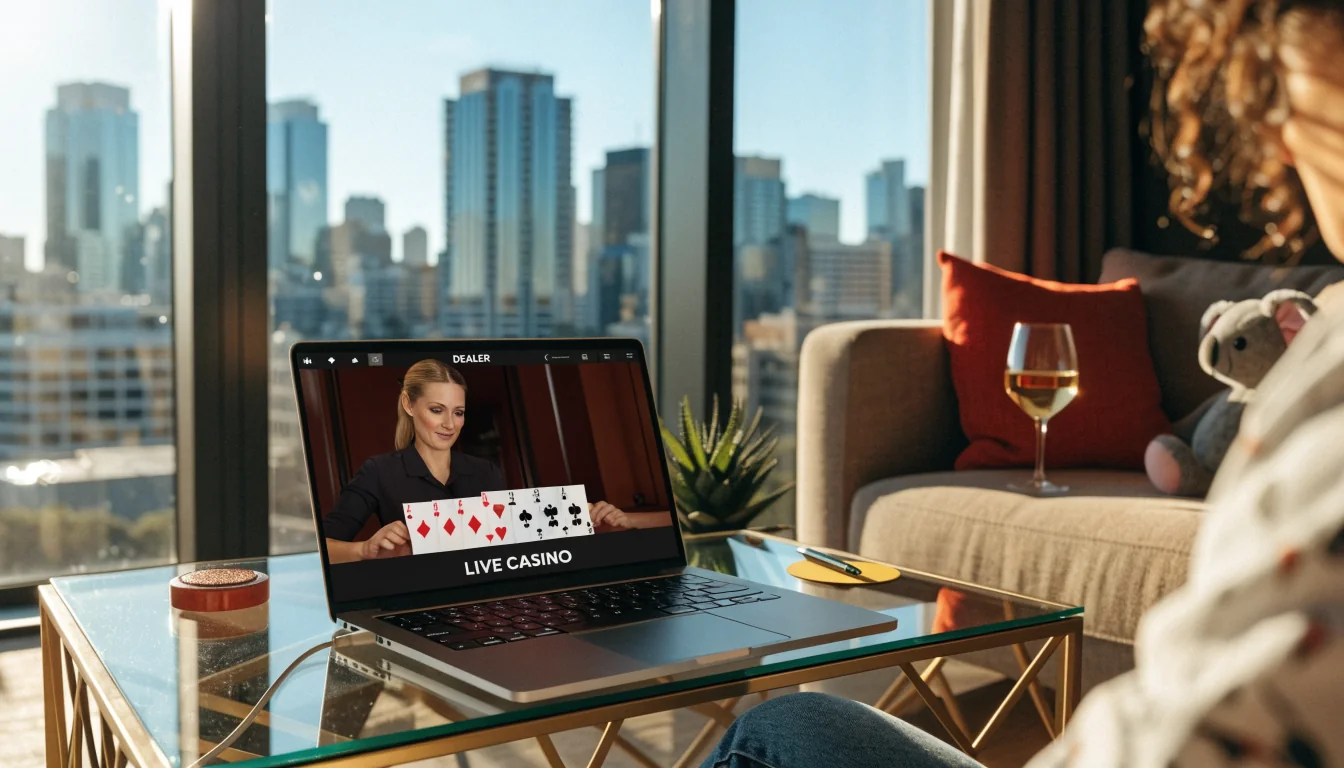
- Live Casino Landscape in the USA
- Australian Live Casino Overview
- Live Casino Experience in Australia
- Software Providers and Free Features
- Live Dealers: Interaction and Quality
- Live Casino Poker Options
- Popular Live Casino Games and RTP
- Roulette Variants and Top Sites
- Playing Live Casino Across Regions
- Top Live Casino Apps and Platforms
Live Casino Landscape in the USA
The US live casino market runs on a state-by-state licensing model, which means a live blackjack table legal in New Jersey simply doesn’t exist for someone logging in from Texas. Each state decides for itself whether to regulate online casino gaming at all, and most haven’t. The result is a patchwork: a handful of states with licensed, regulated live dealer platforms tied to physical casino partners, and a much larger number where the product isn’t offered because the legal path to offer it doesn’t exist.
That’s a fundamentally different structure from what Australian players are dealing with, and it’s worth naming plainly before moving on: US regulation restricts where an operator can be licensed to run a live casino. It doesn’t ban the player from an unlicensed one by federal law, but the practical effect is similar — access depends entirely on geography, and platforms geofence by state to stay compliant.
Bonus structures in the licensed US states tend to follow the same industry habits seen everywhere else — deposit matches, free-play credits, loyalty tiers attached to a land-based rewards card. None of that changes the core issue for a market this fragmented: the "bonus" advertised on a homepage means nothing if the state code blocks the sign-up page before a player gets that far.
None of this describes the Australian situation, where there’s no state-by-state licensing puzzle to solve — there’s simply no domestic licence for online casino games at all, live or otherwise. Australian players approach the same category of product — live dealer tables, streamed in real time — through an entirely different legal door, and that’s the subject from here on.
Australian Live Casino Overview
No company can hold an Australian licence to run an online casino — live dealer tables included. The Interactive Gambling Act makes that the operator’s problem, not the player’s. Nobody’s coming for an account holder who plays blackjack with a dealer streaming from Riga at 2am.

That legal split shapes everything else on this page. Every live casino site worth discussing is licensed offshore, and the ones worth using have built their entire payment and support stack around Australian habits anyway — AUD deposits as standard, no forcing a currency conversion on players who just want to see their balance in dollars.
Security is the one area where "offshore" doesn’t mean "lesser." The platforms that get recommended here run 256-bit SSL encryption, the same standard banks use domestically. That’s not a marketing line — it’s a baseline check before a site earns a mention at all.
What follows isn’t a regulatory lecture. It’s what actually happens once someone sits down at a live table from Sydney or Perth: age checks, currency handling, how withdrawals move, what the mobile experience looks like day to day.
Live Casino Experience in Australia
No Australian-licensed operator can legally offer a live casino to residents — that part sits in the previous section and doesn’t need repeating here. What’s worth walking through is what actually happens once someone opens one of these offshore-licensed sites and starts playing, because the mechanics on the ground look different from what the legal summary suggests.

Getting through the door
Every legitimate site asks for proof you’re 18 before it lets you near a live table. This isn’t a courtesy — it’s the one age-verification line that operators licensed offshore still have to hold, because the payment processors and game studios behind the tables require it regardless of which jurisdiction issued the licence. In practice this means a date-of-birth field at registration, sometimes followed by an ID check before the first withdrawal. Sites that skip this step aren’t being "player-friendly." They’re skipping a control that exists for a reason, and that’s a red flag, not a convenience.
Currency handling is the second thing you notice, and it’s improved. Deposits go in as AUD. No conversion screen, no "your balance will be shown in USD," none of the friction that used to make Australian players do mental exchange-rate math before every hand of blackjack. That single detail — AUD in, AUD out — filters out a chunk of low-effort international sites that never bothered to localise.
PayID withdrawals are often the fastest option, but the exact processing time can vary by operator and your verification status, so do not assume a guaranteed two‑hour window.
What withdrawals actually feel like
This is where the gap between marketing copy and lived experience is widest. Every site claims "fast withdrawals." Almost none define what that means.
PayID is the payment method that’s actually changed the experience, and it’s worth being precise about what it does and doesn’t guarantee. According to one industry review, PayID withdrawals at top-rated Australian sites average somewhere between two and four hours. The same source notes that a handful of operators process them in under an hour for players who’ve already cleared verification. Neither figure is a market standard — it’s one outlet’s snapshot of a handful of operators, and the number for any given site depends entirely on that site’s own verification queue and internal payout schedule. Treat any specific time you read, including this one, as a starting point for questions, not a promise.
What PayID does reliably change is the mechanism. A traditional bank transfer from an offshore casino can sit in limbo for days while it clears through intermediary banks — the transaction just isn’t a normal domestic transfer, and it gets treated accordingly. PayID resolves to an Australian account directly. That structural difference is why it’s become the payment method players actively look for, rather than something operators can bolt on and forget about.

The other side of that coin: a site with no PayID option and no other Australian-friendly payment rail is worth walking away from. Not because the games are necessarily worse, but because it signals the operator hasn’t bothered building for this market specifically — and payment friction is usually the first sign of others.
Bank blocks are still part of the picture
Even with PayID in place, some transactions from major Australian banks to gambling-related merchants get blocked or flagged on the bank’s end, independent of anything the casino does. This is a bank-side control, not a casino failure, and it’s one reason PayID and crypto have become the practical workaround — they route around a block that a card payment or standard transfer would hit directly. Anyone who’s had a card declined at a live table and assumed the casino was broken has usually just run into their own bank’s filter.
On the felt, not just at the cashier
The live experience itself — blackjack, roulette, baccarat streamed from a studio — plays out the same way whether the operator is licensed in Curaçao or anywhere else offshore, since none of it can be licensed onshore. What differs site to site is table availability at Australian peak hours, given the time-zone gap to the studios (mostly in Europe), and how well the interface holds up on a phone screen versus a desktop browser.
Direct Australian account transfers, typically cleared within a few hours when verification is complete.
Blockchain payments that bypass traditional banking filters, often instant but require a crypto wallet.
Standard offshore bank wires, can be delayed by intermediary banks and may take several days.
That second point matters more than most reviews admit. Mobile accounts for the overwhelming majority of Australian online gambling sessions — well over 70% by one industry estimate — which means a live dealer table that renders badly on a 6-inch screen isn’t a minor cosmetic issue. It’s the primary way most players will actually encounter the game. A site that still treats mobile as an afterthought, with betting controls too small to tap accurately or video that buffers on 4G, is optimising for a desktop audience that barely exists anymore in this market.
The honest summary
| Element | What players actually get |
|---|---|
| Age check | Mandatory 18+ verification, no legitimate exceptions |
| Currency | AUD deposits, no forced conversion |
| Withdrawals | Speed varies by operator; PayID is the fastest mechanism available, not a fixed timeframe |
| Bank blocks | Can happen regardless of casino; PayID or crypto sidestep it |
| Device | Mobile is the default experience, not a secondary one |
None of this changes the legal boundary underneath it — playing at an offshore-licensed site isn’t illegal for the individual player, but no version of this experience happens on a locally licensed platform, because that platform doesn’t exist. Everything above is what the workaround looks like in practice, warts included.
Software Providers and Free Features
Behind every live dealer stream sits a stack of technology most players never think about — until something goes wrong. Studio cameras, encryption layers, random number generation for side bets, payment rails that either work on a Saturday night or don’t. The "seamless experience" operators advertise is really a chain of separate systems that all have to hold together at once.
What actually secures the games
Strip away the marketing language and the security question comes down to one thing: is the connection between the player’s device and the studio actually locked down. The platforms worth using run on 256-bit SSL encryption — the same standard banks use for online transactions. That’s not a nice-to-have, it’s the baseline. If a site can’t confirm this, or buries it three pages deep in a terms document, that’s a signal on its own.

What SSL doesn’t cover is everything downstream of the connection — how the operator stores card details, how long session data sits on a server, who has access to withdrawal logs. Encryption protects the pipe, not the house. Worth remembering when a site leans hard on "bank-level security" language without saying what, specifically, is encrypted.
Software providers: who’s actually running the tables
The dealer on screen works for a studio, not for the casino brand showing the stream. A handful of providers build and operate the vast majority of live tables that Australian players see, licensing the same feeds to dozens of different-looking sites. This matters more than it sounds — it means the actual game engine, the shuffle mechanics, the payout logic, is usually identical across "competing" casinos. What differs is the wrapper: the site’s cashier, its bonus terms, its support desk.
That’s worth knowing before treating any two casinos as meaningfully different products. Often they’re the same table with different paint.
All live casino operators serving Australian players are licensed offshore, as no domestic licence exists for online gambling under the Interactive Gambling Act.
Payment flexibility — where the real differences show up
If the games are largely interchangeable, the money side isn’t. This is where operators actually compete, and where the gap between a good site and a mediocre one shows up fastest.
A few things worth checking before depositing anything:
- Currency handling. A site built for the Australian market runs in AUD without forcing a conversion through USD. One that quietly bills in USD and lets the card network handle conversion is adding a fee nobody mentioned up front.
- Withdrawal method variety. PayID and crypto rails exist partly because Australia’s major banks can and do block transactions flagged as gambling-related. A site offering only card withdrawals, with no PayID or crypto alternative, is offering a payment method that might not survive contact with the player’s own bank.
- Speed as a signal, not a feature. Slow withdrawals — the kind stretching past five days — usually aren’t a technical limitation. Payment processing in 2026 doesn’t take five days anywhere else. When it happens at a casino, it’s a liquidity decision dressed up as an infrastructure problem.
None of this is about finding the flashiest cashier page. It’s about checking whether the site’s payment stack was built around the player or around delaying the player.
"Free live casino" — what the phrase actually means
Search around and "free live casino" comes up a lot, usually attached to sites promising demo tables with live dealers. Worth being precise here: a genuinely live dealer, in real time, dealing to a table with no real money on it, is expensive to run and rare to find. Most "free" live casino experiences are either capped-time previews before a deposit wall, or they’re not live at all — pre-recorded loops styled to look live.
There’s a difference between a free spin on a slot and a "free" live blackjack hand. The slot’s RNG doesn’t care if money’s on the table. A live studio, with a real dealer and real overhead, generally does. Treat "free live casino" listings with the same scepticism as any other promotional term — check what’s actually running before assuming it matches the description.

Reading the fine print before it reads the wallet
The technology stack matters less than what it’s wired to. A studio can run flawless 4K streams with a dealer who never misses a beat, and the casino sitting on top of it can still attach wagering requirements at 60x or higher — a threshold industry commentary flags as excessive, turning a bonus into something closer to a trap than a gift. The tech doesn’t fix the terms. The terms are a separate decision, made by the operator, not the studio.
Same with support for local payment rails. A casino running the best available live software can still choose not to support AUD properly, still route deposits through USD, still make withdrawals slower than they need to be. The software is the visible layer. The payment and bonus structure is the one that decides whether the "free" and "fast" claims hold up once real money and real patience are on the line.
Live Dealers: Interaction and Quality
A dealer who mispronounces "no more bets" or fumbles the shoe tells you more about a studio’s standards than any glossy screenshot on the homepage. I’ve sat through sessions where the dealer clearly hasn’t been briefed on the table’s own side bets — and sessions where the same person handles a full Dragon Tiger round without a wasted second. The gap between the two is the whole story.
Bank Blocks
Major Australian banks may block or flag transactions to gambling merchants, regardless of the casino’s compliance, potentially preventing deposits or withdrawals.
Studios producing for the Australian market generally run English-speaking dealers around the clock, which matters more than it sounds — a dealer struggling with rules in real time slows the whole table down and makes the interaction feel scripted rather than live. What separates a good table from a forgettable one comes down to a short list:
- Pacing. Cards or wheel spins delivered without dead air between rounds. A dealer who chats between hands is fine; a dealer who chats during the betting window is a problem.
- Camera discipline. Multiple angles that actually cut to the result — not a single static shot that leaves you guessing whether the ball landed where the graphics overlay says it did.
- Rule fluency. Especially on blackjack tables, where side bets, insurance, and split rules need to be explained without hesitation when a player asks.
- Composure under load. Peak-hour tables get busy chat windows. A dealer who keeps dealing cleanly while also acknowledging players in text is doing two jobs at once, and it shows when they’re good at it.
Dragon Tiger tables are a useful test case because there’s nowhere to hide. One card each, one comparison, no complex rules to lean on — the entire experience is the dealer’s timing and the stream’s clarity. If a site’s Dragon Tiger table feels rushed or the reveal is poorly framed, it’s a fair bet their blackjack and baccarat tables have the same production issues underneath the polish.
Payout speed is the other half of "quality," and it’s where the human element quietly ends and the back office takes over. A dealer can run a flawless table and the money still sits in limbo if withdrawal processing is slow. According to one industry review, PayID withdrawals were cleared in under an hour for verified players at one operator, and other reviews report similar sub-hour processing at a handful of top sites — including, apparently, on weekends and public holidays. That’s not a market-wide guarantee, and treating one operator’s numbers as the standard would be dishonest. What’s consistent across the material is simpler: sites without PayID or another AUD-native payment method are the ones worth skipping first.
Good dealer work and fast payouts tend to come from the same kind of operator — one that’s invested in the parts players don’t see on a highlight reel.
Live Casino Poker Options
Poker at a live table is a different animal from a pokie spin. There’s no RTP printed on the felt, no fixed volatility curve someone worked out in advance — the maths sits underneath in the rake and the table rules, and the outcome depends on the other players as much as the dealer. That’s worth saying plainly before comparing tables, because "poker" and "pokies" get lumped together in casino lobbies and they don’t behave the same way at all.
Verification Steps
- Provide date of birth during registration.
- Upload a government‑issued ID for identity confirmation.
- Complete a secondary document check before the first withdrawal, if requested by the operator.
Live poker on Australian-facing platforms usually shows up as one of a few formats: Casino Hold’em, Ultimate Texas Hold’em, and various three-card or Caribbean stud variants dealt by a real person on camera. These aren’t tournament poker against other players — they’re house-banked games where the "poker" element is the hand ranking, but the bet structure is closer to baccarat or blackjack. Worth knowing going in, because someone expecting a live multi-table tournament will be disappointed by a single dealer running heads-up hands against everyone at once.
Table limits and what they actually mean
Betting limits on live poker tables vary by room and by time of day — busier tables tend to open with higher minimums, quieter ones drop them to attract traffic. What matters more than the number itself is whether the site publishes it before you sit down. A table that hides its limits until after you’ve placed an ante is a table designed to catch you out. The better platforms show minimum and maximum bets on the table selector itself, no clicking through required.
Where the maximum sits also tells you something about who the table is built for. High-limit rooms exist for a reason, and that reason isn’t the casual player. If the lobby only offers high-stakes tables with no low-limit alternative, that’s a sign the operator isn’t interested in a broad player base — it’s chasing a narrow one.

Getting paid after a session
Payout speed on poker winnings runs through the same rails as everything else on the site — there’s no separate poker cashier. For withdrawals via PayID, one industry review reported an average processing time under 24 hours at top-rated operators, with transactions clearing in minutes even on weekends and public holidays. That second point matters more for poker players than pokie players, since a good live session often ends late on a Friday or Saturday night, and a withdrawal method that doesn’t care what day it is saves an actual wait.
Cashing out. Not a footnote.
What separates a decent poker room from a padded-out one
A few things worth checking before treating any live poker room as the main event:
- Table variety — Casino Hold’em, Ultimate Texas Hold’em, and stud variants each play differently; a room with only one format is thin, whatever the marketing says.
- Published limits — minimums and maximums visible on the table list, not buried in a rules PDF.
- Dealer availability — tables that run at fixed hours rather than 24/7 mean fewer options when actually looking to play.
- Consistent payout rails — the same PayID or bank-linked withdrawal process that applies to slots should apply here, with no separate delay bolted on for table games.
None of this replaces checking the specific operator’s terms — table limits and hours shift, and what’s true of one room this month won’t necessarily hold the next. But a live poker section built around one or two forgettable tables, dressed up as a full "poker suite," is worth noticing for what it isn’t.
Popular Live Casino Games and RTP
Blackjack and baccarat dominate live lobbies for a simple reason: the math is transparent and the house edge is small enough that regulars can explain it to you in one sentence. Baccarat in particular survives on repetition — a hand takes seconds, there’s no decision tree to learn, and the banker bet keeps the edge tight. Blackjack asks more of the player: basic strategy, side bets you should mostly ignore, and a dealer who’s watching the same shoe you are. Neither game publishes an RTP the way a pokie does, because the return depends on how you play, not just on the game’s design.
PayID
A fast Australian payment system that routes funds directly to a recipient’s bank account using a simple identifier, bypassing traditional card or wire processes.
That’s the split worth understanding. Table games are skill-adjacent — your choices move the number. Live pokies, streamed with a real reel or a dealer spinning a wheel dressed up as a slot mechanic, run on fixed math the same way their RNG cousins do. The best real money pokies available to Australian players typically sit in a 95–97% RTP band. Book of Dead, still one of the more requested titles at operators that carry it, comes in at 96.21% — a number worth checking against the paytable in the game itself, because "typically" is doing a lot of work in that first sentence and individual titles move around inside the range. Sweet Bonanza gets asked about constantly and I won’t pretend to have a clean figure for it here; the source I’d trust for the rest of these numbers doesn’t state one, and repeating a guess dressed as a fact is worse than leaving the gap open.
Volatility matters as much as the headline percentage, and it’s the part newer players skip. A 96% RTP pokie can still empty a balance fast if it’s high-volatility — long dry stretches, then a spike. Lightning Linkis the standard example of that pattern: infrequent hits, bigger when they land. Low-volatility titles sit at the other end, paying more often in smaller amounts, which suits a session where the point is play time rather than a shot at a big number. Neither is “better.” They’re different bets on how you want your bankroll to behave over an hour.

Game shows sit in their own bucket — wheel formats, bonus rounds triggered by a spin rather than a hand, presenters running the segment more like a broadcast than a dealt game. They don’t have a comparable RTP framework because the payout structure is tiered and multiplier-driven rather than hand-by-hand. Worth trying once for the format; not something to build a bankroll strategy around without understanding the multiplier tiers first.
A few practical filters carry over from the pokies side of the site and apply just as well here. A library under 500 titles is a signal the operator hasn’t invested much beyond a licensing deal with one studio, and that usually shows up in how thin the live catalogue is too. Bonus terms are the other tell — wagering conditions buried in fine print rarely favour table or live game play at all, and some exclude live dealer wagers from bonus contribution entirely. Read that clause before the welcome offer, not after a session you were trying to clear it with.
None of this replaces checking a specific title’s paytable before playing it for money. The range above is a starting point, not a guarantee attached to any one game.
PayID is fastest
PayID remains the quickest withdrawal method available to Australian live‑casino players, though speed still depends on operator verification.
Roulette Variants and Top Sites
Roulette translates to live dealer format better than almost anything else on the floor. There’s no card count to obscure, no side-bet menu to learn — just a wheel, a ball, and a table map that looks the same whether you’re in a Melbourne pub’s TAB or watching a stream at midnight. That simplicity is exactly why the format multiplies. Operators know a single wheel with three camera angles reads as "basic," so they stack variants to make the lobby look deep.
What’s actually different between variants
European roulette (single zero) is the baseline and the one worth defaulting to — the house edge sits lower than its American, double-zero counterpart, and live studios almost always run European wheels because the math favours the house less aggressively while still holding up over volume.
Beyond that, the variants are mostly presentation, not mechanics:
- Speed roulette — shorter betting windows, faster spin cycles. Same wheel, less time to think, which matters if you’re the type who changes your mind at the last second.
- Multi-camera or “immersive” roulette — slow-motion replays of the ball drop, multiple angles. Doesn’t change odds, changes how long you sit there watching it.
- Auto roulette — no dealer, wheel spins on a timer. Cheaper for the operator to run, which is worth knowing when a site pushes it hard in the lobby.
- French roulette — same single-zero wheel as European, with rules like la partage that return half a losing even-money bet under specific conditions. Rare in live lobbies but worth hunting for if it’s offered.
None of these change what happens to your money after you win. That’s the part worth spending more time on than the wheel itself.
Choosing where to actually play
A live roulette table is only as good as what happens when you try to cash out from it. Withdrawal speed varies by casino and, from what I’ve seen operators publish themselves, even by payment method within the same casino — PayID transfers can clear in under 30 minutes at some sites, though that’s one operator’s own stated figure, not a market average, and it depends on your verification already being sorted before you hit "withdraw."
Worth checking before depositing, not after:
- AUD support without conversion friction — if the roulette table quotes in USD and your card statement shows a conversion fee, that’s a site built for a different market wearing an Australian coat of paint.
- Bank transaction handling — some Australian banks block transfers to gambling operators outright. PayID sidesteps that blockage in a way a standard bank transfer doesn’t, which is part of why it’s become the default rail here.
- Wagering terms tied to table games — roulette bonuses often carry different contribution rates than pokies. A “100% match” that only counts 10% of roulette stakes toward clearing it isn’t the same offer it looks like on the promo banner.
"Live casino bonus" is doing a lot of work on a lot of homepages. Read what it actually funds before assuming it applies to the wheel you’re sitting at.
Playing Live Casino Across Regions
Australians who play live dealer games rarely stick to one jurisdiction’s platforms. The same operators that serve players searching for a live casino in Malaysia or India also compete for Australian traffic, and the tables themselves — blackjack, baccarat, roulette streamed from studios abroad — look identical regardless of who’s logged in. What differs is how the deposit and the device get there.
Mobile is where almost everyone shows up. By one industry survey’s count, mobile sessions make up over 70% of Australian online gambling activity, and live casino follows that pattern closely — a dealer stream fits a phone screen well enough that a desktop feels unnecessary. Compare that to players in Canada or India, where desktop play still holds a meaningful share in some segments. Australia skipped that stage almost entirely.
How long do withdrawals usually take?
Withdrawal times differ by payment method and operator; PayID often clears within a few hours, while bank transfers can take several days.
Is playing live casino legal for Australian residents?
Playing on offshore‑licensed sites is not illegal for Australian players, but there is no locally licensed live‑casino provider due to the Interactive Gambling Act.
Deposit habits tell a similar regional story. The same survey put the average monthly spend of an active Australian online casino player at $127 — modest compared to some high-roller markets in Asia, but consistent with a base that treats live tables as regular entertainment rather than occasional binges. What’s harder to compare across regions is the banking friction. Australian banks can and do block transactions to gambling operators, something players in jurisdictions with regulated domestic casinos rarely deal with. A Canadian player funding a licensed provincial site doesn’t hit the same wall an Australian does trying to move money to an offshore live casino.
That friction is exactly why local payment routing matters more here than in most comparable markets. Players elsewhere might default to a card or a wallet without a second thought. Australians increasingly route around their own banks instead of through them.
Same games, same studios, different plumbing underneath.
Top Live Casino Apps and Platforms
Choosing a live casino worth your time in 2026 comes down to a few concrete factors: licensing, how generous and fair the welcome offer really is, and how quickly you can get paid out — the notes below break down exactly that for each site on this list.
License: Curacao Gaming Authority (Jumpman Gaming Ltd) · Bonus: up to A$6,600 + up to 250 free spins across 4 deposits Licensed under the Curacao Gaming Authority via Jumpman Gaming Ltd, DragonSlots pairs that with a sizeable welcome package worth up to A$6,600 plus up to 250 free spins spread across four deposits, giving new players room to build up their bankroll gradually.
Bonus: 100% up to A$750 + 200 free spins, 35x wagering · Payout speed: crypto 30-120 minutes, fiat 24-72 hours · Min. deposit: A$30 MrPacho offers a 100% match up to A$750 with 200 free spins on a 35x wagering requirement, and stands out for fast crypto payouts of 30-120 minutes alongside a low A$30 minimum deposit for fiat players too.
License: Curacao OGL/2024/1335/0780 · Bonus: up to A$1,000 + 150 free spins, wager-free · Min. deposit: EUR 20 Operating under a Curacao OGL license, Vegaz Casino’s welcome bonus of up to A$1,000 plus 150 free spins is wager-free, which is a notable perk, and it keeps the entry deposit accessible at EUR 20.
License: Curacao · Bonus: 100% up to A$500 + 200 free spins, 10x wagering · Payout speed: crypto 30-60 minutes, fiat 1-5 days · Min. deposit: A$10 Wild Tokyo holds a Curacao license and backs it with a 100% bonus up to A$500 plus 200 free spins at a comparatively low 10x wagering requirement, plus quick crypto withdrawals in the 30-60 minute range and a A$10 minimum deposit.
License: Curacao – Antillephone N.V. (Versus Odds B.V.) · Bonus: up to EUR 2,000 across 5 deposits + 200 free spins · Min. deposit: EUR 20 Licensed through Curacao’s Antillephone N.V. framework, Thor Casino spreads a bonus worth up to EUR 2,000 across five deposits with 200 free spins included, offering an extended onboarding bonus structure and a EUR 20 minimum deposit.
License: Curacao eGaming OGL/2024/923/0383 (Antillephone N.V.) · Bonus: up to A$2,000 + 100 free spins across 2 deposits · Min. deposit: A$30 WinSpirit is licensed under Curacao eGaming via Antillephone N.V. and offers up to A$2,000 plus 100 free spins across two deposits, with a A$30 minimum deposit for those getting started.
License: Curacao Gaming Control Board OGL/2023/176/0095 (Hollycorn N.V.) · Bonus: up to A$5,000 + 300 free spins across 4 deposits Rollero Casino carries a Curacao Gaming Control Board license under Hollycorn N.V. and backs it with a substantial welcome offer of up to A$5,000 plus 300 free spins spread over four deposits.
License: Curacao Gaming Control Board (TechSolutions Group N.V.) · Bonus: 100% up to A$250 + 100 free spins (1st deposit) Bizzo Casino is licensed by the Curacao Gaming Control Board through TechSolutions Group N.V. and keeps its first-deposit bonus straightforward at 100% up to A$250 plus 100 free spins.
License: Curacao Gaming Control Board OGL/2023/176/0095 (Hollycorn N.V.) · Bonus: up to A$11,000 + 300 free spins (code NEO100) Neospin holds a Curacao Gaming Control Board license via Hollycorn N.V. and stands out for a large welcome bonus of up to A$11,000 plus 300 free spins, unlocked with the code NEO100.
Bonus: up to A$750 + 50 jackpot spins, 35x wagering · Payout speed: crypto ~90 minutes, fiat 1-5 days · Min. deposit: A$30 Kingmaker offers up to A$750 plus 50 jackpot spins on 35x wagering, with crypto withdrawals landing around 90 minutes and a A$30 minimum deposit for newcomers.
Most Australian-facing operators skip a dedicated app and run a browser-based platform instead, wrapped to feel native on a phone. There’s a practical reason for that, not just laziness: app stores enforce their own gambling policies, and a browser build sidesteps the review process entirely. So when someone searches for a "live casino app download," what they usually land on is a mobile site with an "add to home screen" prompt dressed up as an install button.
That’s not a complaint. A well-built mobile site does the job — live dealer streams load fine, tables run smoothly on a decent connection, and there’s nothing to update every time the operator tweaks a game library.
What separates a good platform from a mediocre one
Two things matter more than logo placement or colour schemes:
- Withdrawal speed. By one industry review’s account, some Australian sites clear PayID withdrawals in under 30 minutes; the average across top-rated platforms runs under 24 hours. That’s the range worth checking before signing up — not the marketing copy on the homepage.
- How the platform behaves under load. A live blackjack stream that buffers when three tables are open in tabs isn’t a technical footnote, it’s the whole experience.
The same review flagged operators with withdrawals stretching past five days as a reason to walk away, and that lines up with what I’ve seen: slow payout speed rarely shows up alone. It tends to sit next to unclear verification steps and support that goes quiet once you’ve deposited.
Reading a platform before committing
- Test the live lobby without logging in — most reputable sites let you browse tables first.
- Check whether the mobile build is a genuine responsive site or a cut-down version missing half the tables.
- Look for a stated PayID processing window rather than a vague “fast withdrawals” promise.
"Seamless mobile experience" is the phrase every site uses. What it should mean, concretely, is a live dealer stream that doesn’t drop when you switch from data to Wi-Fi. Anything less is just the phrase.
Is it legal for Australians to play at online live casinos in 2026?
Yes — the Interactive Gambling Act 2001 only prohibits Australian companies from offering online casino services, not individual players. So playing at offshore-licensed live casinos is not illegal for Australian residents.
Can I play crypto casino games on my mobile device?
Yes — mobile play dominates Australian online gambling, accounting for over 70% of all sessions. Crypto and PayID transactions also let players bypass bank blocks on gambling transactions, including on mobile.
Which payment systems are supported by offshore casinos for Australian players?
PayID is the key method to look for — withdrawals resolve directly to an Australian account, averaging 2–4 hours at top-rated sites and sometimes under an hour for verified players. Cryptocurrency is the other main option, and both can bypass bank transaction blocks that affect traditional transfers.
What security features must licensed casinos have?
256-bit SSL encryption is the baseline — the same standard banks use domestically. Legitimate sites also enforce 18+ age verification at registration and ID checks before first withdrawals; skipping these is a red flag.
How do wagering requirements affect bonus payouts?
Excessive wagering requirements (60x and above) can make bonuses effectively worthless, so Australian players are advised to avoid such offers. Always check the bonus terms in the fine print before claiming.