
Best Live Dealer Casino Online Australia: What to Know

- Understanding Live Dealer Casinos in Australia
- Key Features of Australian Live Dealer Casino Sites
- Live Dealer Bonuses and Bitcoin Options
- Live Dealer Roulette and Crypto Integration
- Live Dealer Game Selection and RTP Standards
- Deposit and Withdrawal Methods: Bitcoin and Other Options
- Evaluating Live Dealer Casino Providers
- Top Live Dealer Casinos Accepting Bitcoin
- Playing for Real Money: Legal Age and Offshore Access
- Live Dealer Casinos with Fast Payment Solutions
Understanding Live Dealer Casinos in Australia
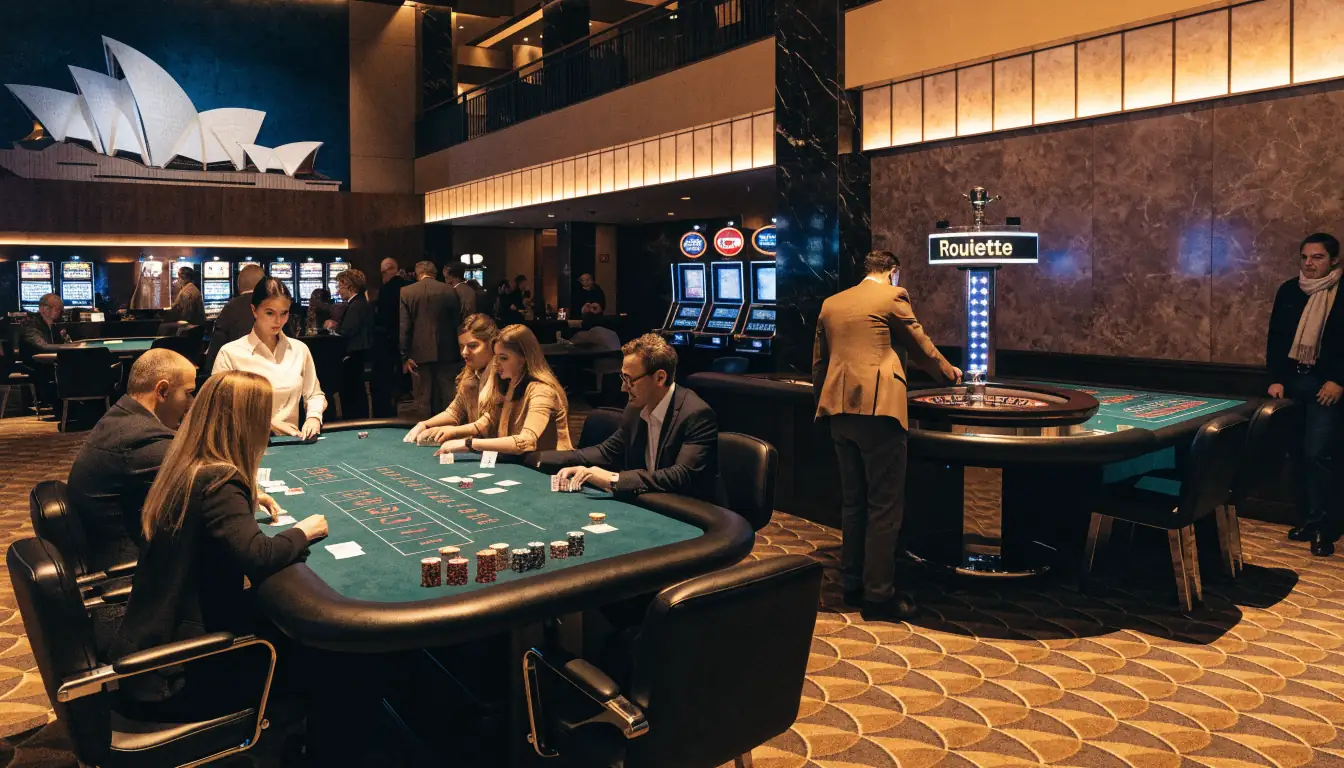
A live dealer table is exactly what it sounds like: a real person dealing cards or spinning a wheel, filmed on camera, streamed to a screen. No random number generator standing between the player and the outcome — or rather, there is one, but it’s not doing the work the way it does in a standard pokie. What the camera shows is what happened. That distinction matters more than the marketing around it suggests, because it’s the entire reason this segment exists as something separate from the rest of an online casino’s lobby.
I’ve spent enough time watching how these sections get built to know that "live dealer casino" isn’t a genre so much as a production pipeline. A studio, a stream, a dealer trained to work to a camera instead of a pit. Everything else — the blackjack rules, the roulette wheel, the baccarat shoe — is inherited from the land-based version of the game. What changes is the delivery method, and that’s precisely what a standard RNG-driven casino section can’t replicate. A digital slot doesn’t need a studio. A live blackjack table does.
The legal ground this sits on
Here’s the part that gets glossed over in most write-ups, and it shouldn’t be. The Interactive Gambling Act 2001 prohibits Australian companies from providing online casino services — live dealer included — to Australian residents. It also stops offshore operators from holding an Australian-specific licence. Put those two facts together and you get the actual shape of the market: there is no domestically licensed live dealer casino operating for Australian players, and there never will be one under current law, because the licence being asked for doesn’t exist to give.

What the law does not do is criminalise the player. Australian residents can legally gamble at licensed offshore online casinos — the Interactive Gambling Act 2001 targets the companies offering the service into Australia without authorisation, not the individual sitting at home placing a bet. That’s a narrower and more useful fact than it sounds. It means every live dealer casino an Australian player might use is, by definition, an offshore business operating under a foreign licence. Not a loophole. Not a grey area. Just how the structure works.
I mention this early because it reframes everything that follows in this guide. There’s no "best Australian-licensed live dealer casino" to chase, because that category is empty. What exists is a market of offshore platforms, some better run than others, all reachable, none of them local.
Why live dealer sections get treated differently
A standard online casino section is built around volume — hundreds of pokie titles, instant RNG outcomes, no waiting. Live dealer tables run on a completely different rhythm. There’s a queue to join a hand. There’s a dealer pacing the round for a room full of people, not just for one screen. The house edge and payout structure follow the traditional table game rules rather than a programmed RTP curve, so the calculations a player would run on a slot don’t transfer over cleanly.
This changes what "quality" even means in this corner of a casino site. On the pokies side, quality is often about variety and RTP transparency. On the live dealer side, it comes down to stream reliability, table availability at the hours a player actually logs in, and whether the dealer interaction feels like part of a real room rather than a recorded loop with a live face bolted on. Anyone who’s sat through a badly buffered stream during a hand they had money on understands why this distinction isn’t cosmetic.


The size of what’s being served
The scale here isn’t small. Australia’s online gambling market generates $7.2 billion in annual revenue, according to one industry review — a figure that includes sports betting and other verticals alongside casino-style play, but it gives a sense of why offshore operators keep investing in this audience despite the legal restrictions on local licensing. Money follows demand, and demand hasn’t gone anywhere just because domestic supply is blocked.
Most of that demand shows up on a phone screen rather than a desktop. The same review found that 73% of Australian online casino sessions happen on mobile devices, which says something about how live dealer studios now build their broadcasts — vertical-friendly camera angles, simplified betting panels, chat windows that don’t eat half the screen. A studio filming for a desktop-first audience a decade ago would look clumsy on a 2026 phone.
What players say they’re chasing, per that same source, is a fairly short list: fast payouts in AUD, bonuses worth claiming, security they don’t have to think about twice, and a game library that actually loads properly on mobile. None of that is exotic. It’s the baseline. The average monthly deposit by active Australian online casino players sits around $127, according to the same industry snapshot — a number worth holding onto, because it suggests most players aren’t betting the house. They’re spending in a range that a bad payment delay or a broken bonus term can wreck disproportionately.
Security and the guardrails that come with it
Top-rated Australian-facing online casinos run on 256-bit SSL encryption — standard practice at this point, not a differentiator, but worth confirming rather than assuming. Live dealer platforms carry an added layer of exposure simply because of the video stream itself: real money, real time, real dealer, and a connection that has to hold for the length of a session. A dropped stream mid-hand is a different kind of problem than a slot freezing between spins.
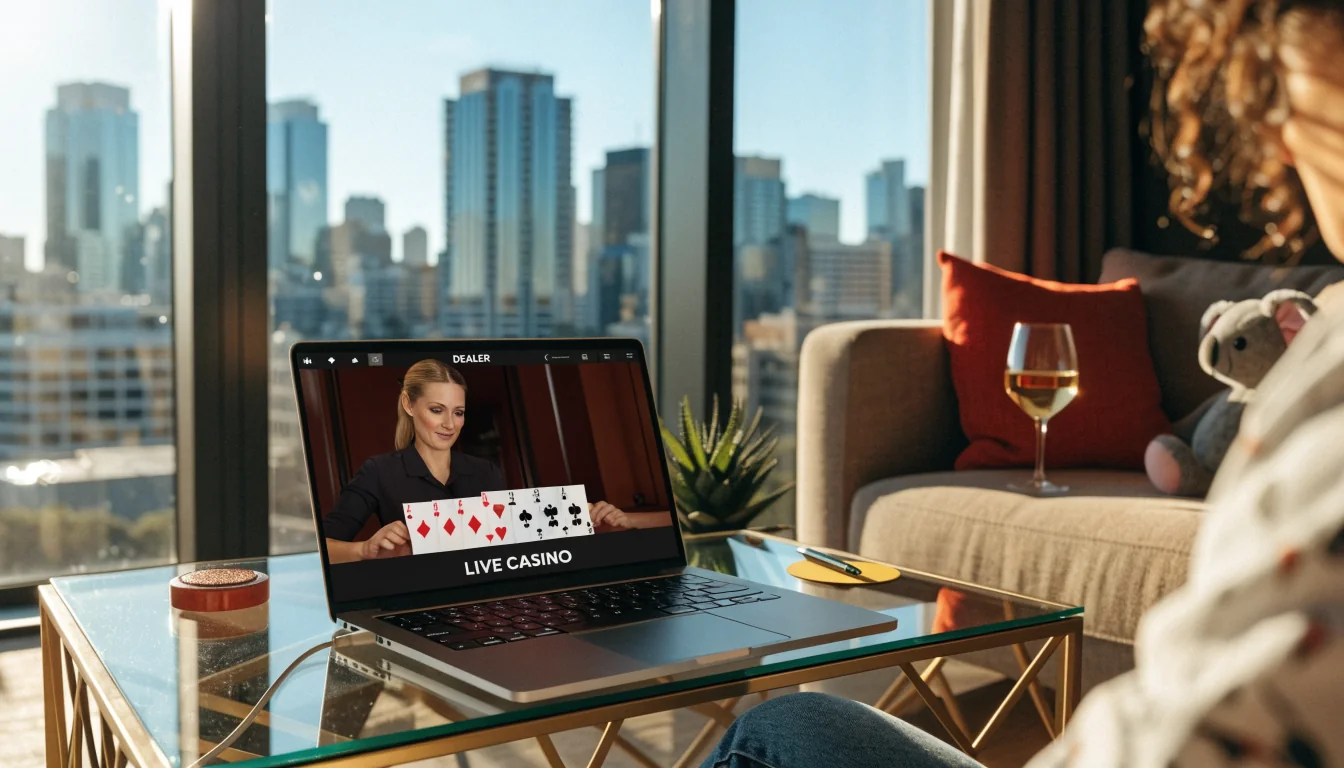
Responsible-gambling tooling sits underneath all of this regardless of which section of the site a player is in. Deposit limits, loss limits, session time limits, reality checks, self-exclusion options, and cooling-off periods are standard features on platforms that take this seriously — not decorative settings buried in an account menu, but tools that matter more in live dealer play than almost anywhere else on the site. A live table doesn’t pause between rounds the way a solo pokie session might. The pace is set by the dealer and the other players at the table, and that pace can pull a session longer than intended without anyone quite noticing. The limit settings exist for exactly that moment.
Age verification is the other non-negotiable. The minimum age for online gambling in Australia is 18, full stop, and it’s the first checkbox any legitimate offshore operator enforces before a live table ever loads.
Key Features of Australian Live Dealer Casino Sites
No Australian regulator issues a licence for online casino games, live dealer tables included. So the first thing worth checking on any platform is where its licence actually comes from — not whether one exists, but which jurisdiction stands behind it. Reputable offshore operators run under Malta’s MGA, Gibraltar, Curaçao, the Isle of Man, or the Kahnawake Gaming Commission. These are the names that appear in the footer if the operator is being straight about who’s actually accountable. A page that just says "licensed and regulated" without naming a jurisdiction is telling you nothing. Worse, it’s letting you assume there’s a local watchdog checking in — there isn’t.
No Australian licence
Australian players can only use offshore operators, as no local licence exists for live dealer casino games.
I’ve seen sites lean on the word "regulated" like it settles the question. It doesn’t. Regulated where, by whom, with what actual enforcement power over a company that may be incorporated on the other side of the planet — that’s the real question, and most marketing copy is written specifically so you stop asking it.
Withdrawal speed as a feature, not a footnote
Live dealer platforms live and die on how fast they pay, because the whole appeal of a real-time dealer is immediacy — you don’t want that broken by a week-long wait to get your money out. According to one industry review of Australian-facing platforms, average withdrawal times break down roughly like this:
| Method | Typical processing time |
|---|---|
| E-wallets (Skrill, Neteller) | 2–24 hours |
| Debit/credit card | 1–5 business days |
| Bank transfer | 3–7 business days |
| Overall average, top-rated platforms | 12–24 hours |
That’s one operator’s account of its own numbers, not an industry standard — every platform sets its own processing windows, and they change. Still, the pattern holds across most sites I’ve used: e-wallets clear fastest, cards and bank transfers trail well behind. If a site advertises "fast withdrawals" without saying which method that applies to, assume they mean the fastest one and not the one you’ll actually use.
E-wallets and instant deposits
E-wallets do double duty here — Skrill and Neteller aren’t just quick on the way out, they’re also the deposit method most live dealer sites are built around, because they route money without ever touching a card network that might flag the transaction. Deposits through them tend to land instantly; withdrawals take longer only because the operator’s own verification queue sits in between.
POLi deposits are the other piece worth knowing. Top-rated platforms support POLi as an instant deposit option that draws directly from an Australian bank account rather than through a card. It skips the card-decline problem entirely, which matters more than it sounds.

Why cards get declined
Some Australian banks have introduced their own restrictions on gambling-related transactions, and that’s a bank decision, not a casino one. A card can be declined at checkout even when the casino side of the transaction is fine and the funds are sitting in the account. It’s not a glitch. It’s a bank quietly deciding it doesn’t want that line item on its books. This is one of the reasons e-wallets and POLi have become the default recommendation on live dealer sites rather than a nice-to-have — they route around a restriction the casino has no control over and, frankly, no interest in advertising.
What "secure" actually needs to mean
"Bank-level security" is one of those phrases that sounds specific and says nothing. What actually matters on a live dealer platform:
- A named licensing jurisdiction, visible in the footer, not buried in terms.
- Identity verification required before withdrawal — a genuine site asks for ID, not just at signup theatre but as a real gate before money moves.
- A stated method and rough timeframe for each withdrawal option, not a single vague promise.
- Responsible-gambling tools built into the account settings, not linked out to a PDF nobody opens.
If a platform is vague on all four, the live dealer stream itself — however good the production — isn’t the part that should worry you.
Support that isn’t the casino’s job
None of this replaces having somewhere to go if play stops being fun and starts being a problem. Gambling Help Online runs free, confidential support around the clock in Australia, independent of any operator. Worth bookmarking before you need it, not after.
The features that actually separate one live dealer site from another aren’t the camera angles or the dealer’s accent. They’re the licence named in the footer, the withdrawal method that matches how you actually want to get paid, and whether the site is honest about the banking friction that isn’t its fault but is absolutely its problem to help you navigate.
Live Dealer Bonuses and Bitcoin Options
A "welcome package" on a live dealer lobby looks generous until the wagering requirements show up in the terms. Match percentages on a first deposit, a set of free spins tacked on for the slots side of the site, sometimes a reload offer for the following week — the structure is nearly identical across operators because it’s built around the same math: get the player to put real money on the table, then attach conditions to how fast that money (and whatever it turns into) can leave again.
Bonus traps
Live dealer bonuses often come with high wagering requirements that can render the offer ineffective.
None of that is a reason to skip reading the terms. It’s a reason to read them before clicking "claim." Wagering requirements should be visible up front, not buried three clicks deep in a help centre article, and any offer that hides them until after deposit is a offer worth walking away from. The same goes for no-deposit free spins: winnings from those spins are typically locked until a real-money deposit is made — the "free" part of the promotion has a string attached, and the string is your card details.
Where Bitcoin fits into the offer
Bitcoin and other cryptocurrencies show up in two places on a live dealer site: as a funding method for bonus-eligible deposits, and as a withdrawal rail once the wagering is cleared. The second part is where crypto actually earns its reputation. Cryptocurrency withdrawals are processed in under 30 minutes at platforms that support them — fast enough that the payout arrives before the shift at the live table has finished dealing the next shoe.
That speed doesn’t change the bonus math underneath it. A crypto-funded deposit still carries the same wagering conditions as a card or e-wallet one. The currency moves faster; the fine print doesn’t move at all.
PayID as the local comparison point
For players who aren’t using crypto, PayID is the domestic equivalent worth knowing about. Transactions go through in minutes, including on weekends and public holidays, according to one industry review of operator conditions — a detail worth noting because bank transfers historically slowed to a crawl the moment a Friday afternoon hit. Withdrawal timing on PayID at top-rated Australian sites has been reported anywhere from under 30 minutes to around two hours by the same kind of review, which is a wide enough range that it’s worth checking an operator’s own stated processing time before relying on it for anything time-sensitive.

The pattern that matters here isn’t the exact number — it’s that PayID and crypto both sit well ahead of card and bank withdrawals, and both get bundled into the same "fast payout" marketing language used across the industry. Read as a promise, "fast payout" means nothing. Read as a description of PayID or crypto rails specifically, it’s usually accurate.
What Australian players are actually optimising for
Surveys of local player preference tend to land on the same short list: quick payouts in AUD, bonuses that don’t require a law degree to decode, solid security, and a game library that runs properly on a phone. Bitcoin options and PayID speed answer the first item on that list. They don’t answer the other three — bonus terms, security standards, and mobile performance are separate questions, and a fast payout on a bad bonus is still a bad bonus.
Worth remembering before comparing offers side by side:
- Wagering requirements determine how much of the bonus is actually collectable — the headline percentage doesn’t.
- Free spin winnings from no-deposit offers generally require a real deposit before they’re withdrawable.
- Crypto and PayID withdrawal speed applies to the payout mechanism, not to how quickly bonus funds convert to real money.
Fast rails move money quickly. They don’t make the underlying terms any more generous.
Live Dealer Roulette and Crypto Integration
Roulette is the table game that translates best to a live stream. A wheel either spins fair or it doesn’t, and a camera pointed at it removes most of the guesswork that comes with an RNG-only version. That’s probably why live roulette tables tend to be the first thing a real-time dealer lobby fills up with, ahead of blackjack variants or game-show formats. European and American wheels both show up regularly, sometimes several tables running in parallel so a busy period doesn’t mean a queue.

Betting on those tables in crypto is where things get more interesting than the marketing copy usually admits. A Bitcoin or Ethereum bet on a live roulette spin settles the same way a card-funded bet does — the wheel doesn’t know or care what currency sits behind the chip. What changes is everything around the bet: how fast the stake clears into your account, how the operator prices volatility in the conversion, and how the withdrawal comes back out. On the way out, crypto has a real edge — withdrawals in cryptocurrency are typically processed in under 30 minutes, which is faster than most fiat rails can manage for a live table win of any size.
Where the money and the risk sit
Australia’s online gambling market turns over $7.2 billion a year, according to one industry survey, and live dealer tables account for a growing slice of that spend precisely because they feel less like a slot machine and more like a table you’d sit at in person. Crypto sits alongside that as a payment layer, not a separate product — the roulette wheel is identical whether the chips are AUD-denominated or converted from a wallet balance.
Security on the table side is handled the same way regardless of currency. Top-rated platforms run 256-bit SSL encryption across the video stream and the betting interface, which matters more for live roulette than for slots because there’s a live financial transaction riding on every spin, not just a server-side random number. The stream itself, the dealer’s actions, and the bet ledger all need to line up, and encryption is what keeps that channel from being tampered with in transit.

None of this changes what the wheel does. A "provably fair" badge on a crypto roulette table doesn’t mean better odds — it means the outcome can be checked against a cryptographic seed after the fact, which is a transparency tool, not a payout guarantee. Worth checking. Not worth trusting blindly.
On mobile
Live roulette on a phone works the same way it does on desktop — same video feed, same betting grid, resized. The dealer doesn’t slow down for a smaller screen, and neither does the wheel. Crypto deposits and withdrawals run through mobile-first interfaces just as they do on desktop, since a wallet address doesn’t change size. What matters more on a phone is connection stability during the actual spin — a dropped frame at the wrong moment is a bigger problem on a live table than on a slot reel that just re-renders.
Live Dealer Game Selection and RTP Standards
Live dealer tables run on a different logic than the pokies sitting next to them in the lobby. A dealer dealing cards or spinning a wheel isn’t generating outcomes through a random number generator — the result comes from a physical action, filmed and streamed. That distinction matters more than most site copy admits. RNG technology is what makes a pokie’s outcome unpredictable and resistant to manipulation; a live blackjack hand doesn’t need an algorithm to be fair, it needs a camera angle you trust and a dealer who isn’t sitting in the same room as the pit boss.
RTP not applicable
RTP percentages are a slot‑machine metric and do not describe the fairness or payout of live dealer tables.
That’s also why the RTP conversation splits into two separate discussions. On pokies, an RTP of 96% or higher is the benchmark worth looking for — it’s a long-run mathematical figure baked into the game’s programming. Apply that same expectation to a live blackjack or baccarat table and it stops making sense. Live games don’t publish an "RTP" the way pokies do, because the payout structure is fixed by the rules of the game itself — the house edge on blackjack comes from basic strategy deviations and payout ratios, not from a hidden percentage buried in software. Anyone quoting an RTP figure for a live dealer table is either confused or trying to sound precise about something that isn’t measured that way. Worth knowing before you take a "high RTP live casino" claim at face value.
What actually varies between tables
The real differences between live dealer platforms show up elsewhere:
- Table limits — minimum and maximum bets, which vary by studio and by time of day.
- Dealer rotation and language — some studios run English-only tables, others rotate multilingual dealers.
- Game rules — side bets, surrender options, and payout structures on blackjack and baccarat differ table to table even within the same studio.
- Stream quality and latency — this affects timed decisions more than it affects fairness.
None of this is a percentage you can look up. It’s something you notice after a few sessions, not something a lobby page tells you upfront.
Mobile changes the picture
A large share of Australian online casino sessions — 73%, according to one industry review — now happen on mobile devices, and live dealer tables are the part of the catalogue mobile handles worst. Streaming a dealer in real time over a phone connection asks more of the device and the network than spinning a pokie reel does. Regular players spend an average of 2.3 hours a week on pokies according to the same source, and that pattern of short, frequent sessions doesn’t translate well to a live table that expects you to sit through several rounds. Worth factoring in before assuming every "mobile-first" claim covers live dealer games the same way it covers pokies.
Deposit and Withdrawal Methods: Bitcoin and Other Options
Credit cards are off the table. That’s not a house rule one operator picked to look cautious — it’s a restriction that applies across the board, and digital currencies used to sit in the same excluded category at plenty of platforms, even where crypto wallets like Bitcoin, Ethereum or USDT are now accepted for deposits and betting elsewhere on the same site. Worth reading the payment terms before assuming your usual method works.
E-wallets fill a lot of the gap left by cards. Skrill and Neteller both move money into a casino account fast, and getting it back out is where the difference actually shows: withdrawal requests through these wallets are processed within 2–24 hours, according to one industry review of top-rated platforms. That’s a wide window — the low end and the high end are not the same experience — so treat it as a range, not a promise.
Bank transfers sit at the other end. A direct transfer withdrawal can take 3–7 business days, per the same review. Nobody advertises that number on the homepage. It’s the kind of detail that only shows up once you’ve already made the deposit and are waiting on the other side of it.
Debit and credit card withdrawals — where cards are used for deposits only, given the credit card ban — fall somewhere in between, at 1–5 business days by the same source. "Up to five business days" sounds fine in the terms and conditions. It sounds different on day four.

Where banks get in the way
Some Australian banks have introduced their own restrictions on gambling-related transactions, and that can mean a card gets declined even when the casino’s side of the transaction is fine. This isn’t the casino failing you — it’s your own bank deciding, on its own criteria, that the payment looks like gambling and blocking it before it goes anywhere. Frustrating, but worth knowing in advance rather than discovering it mid-transaction.
None of this is under the operator’s control. A "fast withdrawal" claim on a casino’s banking page is only ever half the story — the other half depends on which method was chosen, and sometimes on a bank decision that has nothing to do with the casino at all. Choosing the payment method isn’t a minor step in the process. It’s the process.
Evaluating Live Dealer Casino Providers
No Australian regulator hands out a licence for online casino games, live dealer tables included — that gap is exactly why the jurisdiction on the licence matters more here than it would in a market with a local watchdog. A provider worth the time operates under Malta (MGA), Gibraltar, Curaçao, the Isle of Man, or the Kahnawake Gaming Commission. Any of these means somebody outside the operator’s own marketing department is checking the numbers. None of them is Australian, and no honest review will pretend otherwise.
Beyond the licence, three things separate a provider worth trusting from one worth skipping.
What to check before signing up
- Where the licence sits. Look for the jurisdiction in the footer, not buried in a terms page nobody reads. If it’s missing entirely, that’s the answer already.
- What happens to your money and your data. A serious operator explains this rather than just claiming “secure” — a word that means nothing until it’s backed by encryption standards named on the page, not just implied.
- Whether the site treats you like an adult who might need to stop. Deposit limits, loss limits, session time limits, reality checks, self-exclusion, cooling-off periods — these aren’t decoration. Their presence, and how easy they are to actually use, tells you more about a provider’s intentions than any welcome offer.
I’ve seen platforms that get the games right and the licensing wrong, and the reverse. Neither half is optional.
One more thing worth checking, and it costs nothing to look for: whether the site links out to Gambling Help Online, which runs free, confidential support around the clock in Australia. A provider that makes this hard to find is telling you something about its priorities.
None of this replaces reading the terms yourself before a bonus is claimed or a deposit made. A review can narrow the field. It can’t do the reading for you.
Free live dealer tables — the kind that run without real stakes — are worth using as a test drive for exactly this: does the interface hold up, does the stream lag, does the provider feel built for the long game or the quick sign-up. That’s a cheaper way to judge a platform than trusting the front page.
Top Live Dealer Casinos Accepting Bitcoin
If live dealer tables are your focus, it helps to check licensing, deposit bonuses and payout practicalities before you sit down at the table, since these details shape your real playing experience.
License: Curacao Gaming Authority (Jumpman Gaming Ltd) · Bonus: up to A$6,600 + up to 250 free spins across 4 deposits Operates under a Curacao Gaming Authority licence via Jumpman Gaming Ltd and offers a substantial welcome package spread across four deposits, including a solid batch of free spins.
Bonus: 100% up to A$750 + 200 free spins, 35x wagering · Payout speed: crypto 30-120 minutes, fiat 24-72 hours · Min. deposit: A$30 Pairs a sizeable welcome bonus with free spins and clearly stated wagering terms, plus fast crypto payouts and a low minimum deposit for easy entry.
License: Curacao OGL/2024/1335/0780 · Bonus: up to A$1,000 + 150 free spins, wager-free · Min. deposit: EUR 20 Licensed under a current Curacao OGL registration, it stands out with a wager-free welcome bonus and free spins, backed by an accessible minimum deposit.
License: Curacao · Bonus: 100% up to A$500 + 200 free spins, 10x wagering · Payout speed: crypto 30-60 minutes, fiat 1-5 days · Min. deposit: A$10 Holds a Curacao licence and combines a welcome bonus with low wagering requirements, fast crypto withdrawals, and a very low minimum deposit.
License: Curacao – Antillephone N.V. (Versus Odds B.V.) · Bonus: up to EUR 2,000 across 5 deposits + 200 free spins · Min. deposit: EUR 20 Licensed via Antillephone N.V. under the Curacao framework, it offers an extensive multi-deposit welcome bonus with free spins and a moderate minimum deposit.
License: Curacao eGaming OGL/2024/923/0383 (Antillephone N.V.) · Bonus: up to A$2,000 + 100 free spins across 2 deposits · Min. deposit: A$30 Carries a Curacao eGaming licence through Antillephone N.V. and provides a two-deposit welcome bonus with free spins at an accessible minimum deposit.
License: Curacao Gaming Control Board OGL/2023/176/0095 (Hollycorn N.V.) · Bonus: up to A$5,000 + 300 free spins across 4 deposits Licensed by the Curacao Gaming Control Board through Hollycorn N.V., it features a large multi-deposit bonus package with a generous number of free spins.
License: Curacao Gaming Control Board (TechSolutions Group N.V.) · Bonus: 100% up to A$250 + 100 free spins (1st deposit) Regulated by the Curacao Gaming Control Board via TechSolutions Group N.V., offering a straightforward first-deposit bonus paired with free spins.
License: Curacao Gaming Control Board OGL/2023/176/0095 (Hollycorn N.V.) · Bonus: up to A$11,000 + 300 free spins (code NEO100) Licensed by the Curacao Gaming Control Board through Hollycorn N.V., it offers one of the largest bonus amounts on this list along with free spins via a bonus code.
Bonus: up to A$750 + 50 jackpot spins, 35x wagering · Payout speed: crypto ~90 minutes, fiat 1-5 days · Min. deposit: A$30 Offers a welcome bonus that includes jackpot spins with defined wagering terms, backed by quick crypto payouts and a reasonable minimum deposit.
No proven list of named casinos exists in the material I have to work with here, and I’m not going to invent one just to fill a "top" heading. What I can lay out is the checklist that actually separates a Bitcoin-friendly live dealer platform from one that just bolted crypto onto an old payment page — because the two look identical until you try to withdraw.
What "accepts Bitcoin" should mean:
- Crypto is a first-class deposit method, not an afterthought. The wallet address generates instantly, no manual approval step before you can sit down at a live blackjack or roulette table.
- POLi deposits land instantly. Top-rated platforms support POLi for players who’d rather fund an account straight from their bank without touching a card.
- Crypto withdrawals move fast. According to one industry review, cryptocurrency withdrawals were processed in under 30 minutes at the operators it tested — worth confirming against the site’s own stated terms, since “fast” on a promo page and “fast” on a Friday night queue aren’t always the same thing.
- PayID is the AUD-side benchmark. The same review put average PayID withdrawal times at top-rated Australian casinos under 30 minutes. If a site can’t match that on either PayID or crypto, it’s not actually competing at the top of the market — it’s just using the same marketing copy as the sites that do.
None of this replaces checking the operator’s own withdrawal page before you deposit. "Instant" is a word every casino uses. The terms page is where you find out what it means for that specific site, on that specific payment rail, this week.
A platform worth calling "Bitcoin-friendly" should show its processing times somewhere a player can actually find them — not just promise speed in the welcome banner and go quiet on specifics once you’re signed up.
Playing for Real Money: Legal Age and Offshore Access
Eighteen. Not a suggestion, not a house rule some operator invented — it’s the legal floor for online gambling in Australia, full stop. Any site worth using verifies this before a withdrawal, not after, because "we’ll check later" is how operators lose their licence and players lose their money.
The trickier question is where that real-money play actually happens. No domestic operator can offer online casino games — that part of the market simply doesn’t exist here, live dealer included. What does exist, legally, is an individual’s right to sit down at an offshore table. The law was built to restrict operators, not punish players for showing up. So a resident opening an account with a Malta- or Curaçao-licensed room isn’t doing anything illegal. The licence just isn’t Australian, because Australian ones for this kind of product don’t get issued.
I’ve seen this misunderstood both ways — players who assume it’s all grey-market and risky, and players who assume a foreign licence means "unregulated." Neither is right. The regulation is real. It’s just administered somewhere else, under someone else’s gaming authority, with someone else’s dispute process.
What actually matters before money moves:
- Age verification — government ID, checked properly, before any payout leaves the platform.
- Jurisdiction of the licence — who issued it, and what that regulator actually requires of the operator.
- Where the money sits — AUD balances, no forced conversion, no surprise fees eating the number on screen.
None of that is exotic. It’s just the paperwork nobody reads until a withdrawal gets stuck.
Live Dealer Casinos with Fast Payment Solutions
Speed at the cashier is where a "fast payout" claim either holds up or falls apart. PayID is the clearest example: one industry review of operator terms found transactions going through in minutes, weekends and public holidays included, because the transfer runs on the same rails as everyday banking rather than a casino’s own queue.
Withdrawals as a whole don’t move at that pace. According to the same kind of operator-terms review, platforms marketed as the "best online casino Australia" has to offer process withdrawals within 12–24 hours on average — a range, not a guarantee, and it sits behind identity verification that has to clear first.
What actually separates a fast site from a slow one isn’t the marketing page. It’s whether PayID is listed as a live option at the cashier, and whether the stated withdrawal window matches what other payment methods on the same site require. If a live dealer table sits behind a cashier that hasn’t been updated in years, the games are the least of the wait.
What is the minimum legal gambling age in Australia?
You must be at least 18 years old to gamble online in Australia.
Can I play on an Australian online casino on my mobile?
Yes — 73% of Australian online casino sessions happen on mobile devices, and top platforms build their live dealer streams and game libraries to load properly on phones.
What do Australian players value most in an online casino?
Fast payouts in AUD, bonuses worth claiming, strong security, and a game library that actually loads on mobile — that’s the baseline players are looking for.
Which casinos are the best legal online casinos for crypto withdrawals?
Reputable offshore casinos licensed in jurisdictions like Malta (MGA), Gibraltar, Curaçao, Isle of Man, or the Kahnawake Gaming Commission are the legal option for Australians, and the best of them process cryptocurrency withdrawals in under 30 minutes.
Can I play crypto casino games on my mobile device?
Yes — most Australian online casino sessions happen on mobile, and crypto casinos with fast withdrawals work on phones just like their desktop versions.