
Casino Dice Games in Australia: Rules and Where to Play
- Online Casino Dice Games in Australia
- Dice Game Variants Available in Australian Casinos
- How to Play Casino Dice Games Online
- Understanding the Core Casino Dice Game
- Craps: The Classic Table Dice Game
- Casino Games That Incorporate Dice
- What Casino Games Use Dice and Why
- Official Rules for Casino Dice Games
- Live Dice Games: What Australian Players Need to Know
- Where You Actually Roll the Dice in Australian Casinos
Online Casino Dice Games in Australia
Every so often someone asks me whether rolling dice for money online is legal in this country. The honest answer takes longer than a yes or no, because the law was never written with a specific game in mind. It was written around a delivery mechanism — the internet — and dice games got swept in along with everything else.
The relevant statute is the Interactive Gambling Act, and here I have to flag something rather than pretend it’s settled: some sources cite it as the 1997 Act, others as the 2001 Act. I’ve seen both dates attached to the same prohibition on offering online casino games to Australian residents. I won’t pick one for you — the discrepancy exists in the source material itself, and pretending otherwise would be tidying up a mess that regulators themselves haven’t fully reconciled in public messaging. What’s consistent across both versions is the substance: online casino-style games — slots, poker, blackjack, roulette, and by extension dice-based games played against a house for real money — are prohibited under this framework when offered to Australians.
Before spinning up a dice game session, it’s worth checking how a casino’s licensing, deposit terms and welcome bonus stack up, since those details shape your overall experience more than the game library itself.
License: Curacao Gaming Authority (Jumpman Gaming Ltd) · Bonus: up to A$6,600 + up to 250 free spins across 4 deposits Operates under a Curacao Gaming Authority license via Jumpman Gaming Ltd, and pairs that with a sizeable welcome package spread across four deposits, including a generous free spins allowance.
Bonus: 100% up to A$750 + 200 free spins, 35x wagering · Payout speed: crypto 30-120 minutes, fiat 24-72 hours · Min. deposit: A$30 Offers a solid first-deposit bonus with free spins attached, backed by fast crypto payouts and a low minimum deposit, making it accessible for players who want quick turnaround times.
License: Curacao OGL/2024/1335/0780 · Bonus: up to A$1,000 + 150 free spins, wager-free · Min. deposit: EUR 20 Licensed under Curacao’s OGL framework, this operator stands out with a wager-free bonus structure plus free spins, and keeps the entry deposit modest.
License: Curacao · Bonus: 100% up to A$500 + 200 free spins, 10x wagering · Payout speed: crypto 30-60 minutes, fiat 1-5 days · Min. deposit: A$10 Holds a Curacao license and combines a low wagering requirement on its welcome bonus with fast crypto payout times and a low minimum deposit, useful for players wanting quick access to funds.
License: Curacao – Antillephone N.V. (Versus Odds B.V.) · Bonus: up to EUR 2,000 across 5 deposits + 200 free spins · Min. deposit: EUR 20 Licensed through Curacao’s Antillephone N.V. framework, it offers an extended bonus structure across five deposits along with a substantial free spins package.
License: Curacao eGaming OGL/2024/923/0383 (Antillephone N.V.) · Bonus: up to A$2,000 + 100 free spins across 2 deposits · Min. deposit: A$30 Carries a Curacao eGaming license issued to Antillephone N.V., and its bonus spans two deposits with free spins included, alongside a moderate minimum deposit requirement.
License: Curacao Gaming Control Board OGL/2023/176/0095 (Hollycorn N.V.) · Bonus: up to A$5,000 + 300 free spins across 4 deposits Licensed by the Curacao Gaming Control Board through Hollycorn N.V., this operator backs its offering with a large multi-deposit bonus and a generous free spins allocation.
License: Curacao Gaming Control Board (TechSolutions Group N.V.) · Bonus: 100% up to A$250 + 100 free spins (1st deposit) Regulated by the Curacao Gaming Control Board via TechSolutions Group N.V., with a straightforward first-deposit bonus that includes free spins.
License: Curacao Gaming Control Board OGL/2023/176/0095 (Hollycorn N.V.) · Bonus: up to A$11,000 + 300 free spins (code NEO100) Licensed by the Curacao Gaming Control Board under Hollycorn N.V., it features one of the larger bonus figures on offer along with free spins unlocked via a bonus code.
Bonus: up to A$750 + 50 jackpot spins, 35x wagering · Payout speed: crypto ~90 minutes, fiat 1-5 days · Min. deposit: A$30 Provides a welcome bonus that includes jackpot spins, supported by fast crypto payout times and a manageable minimum deposit for newcomers.
Notice the direction of that prohibition. It targets the operator, not the person rolling the dice. This is the detail that gets lost in casual conversation, and it’s the one that actually matters if you’re trying to understand where you stand. The Act was built to stop businesses from offering these products into Australia — not to criminalise someone sitting on their couch with a phone. There is no domestically licensed real-money online casino operator that can legally offer you a dice game, full stop. The licence simply doesn’t exist here. But the absence of a legal local option is not the same as the activity being illegal for the player.
Why "regulated" doesn’t mean what it sounds like
I’ve worked around enough compliance documents to know that the word "regulated" gets used loosely, and in Australia’s case it hides something important: there is no single body and no single statute covering all of gambling. Regulation splits between the states and territories on one side and the Commonwealth on the other, and they don’t cover the same ground.
The Australian Communications and Media Authority enforces the federal law — the Interactive Gambling Act — which is the piece relevant to anything happening online. But ACMA doesn’t license casinos; it polices the prohibition. Meanwhile, the Northern Territory Racing Commission has become, almost by accident of tax structure, the de-facto authority that most national online bookmakers answer to, because operating from the Northern Territory carries a lower tax burden. None of this apparatus, though, extends to licensing an online casino dice game for the Australian market. Sports betting operators get licensed this way. Casino-style products, including dice games, don’t have an equivalent domestic pathway at all.

So when a site’s footer or an affiliate page tells you to "play only at a licensed operator," ask which licence, issued by whom, for what. If the answer is an online casino product aimed at Australians, there is no Australian licence to point to — because the law doesn’t permit one to be issued. Any licence being referenced belongs to a different jurisdiction entirely, and it says nothing about the legality of offering that product here.
How this plays out differently from the pub or the casino floor
Land-based gambling in Australia runs on a completely separate track. A casino floor with a craps table or a dice pit is regulated by the state or territory it physically sits in, under state gaming law and enforced by state regulators and police — nothing to do with the Interactive Gambling Act, because that Act was drafted specifically for the online space. Walk into a licensed venue in Victoria or New South Wales and the rules, inspections, and licensing chain are all domestic and visible. That’s the version of "licensed and regulated" that actually means something concrete on this market.
Illegal Offering
Offering real‑money online dice games to Australian residents breaches the Interactive Gambling Act and can lead to site blocking or legal action against the operator.
Move the same dice game onto a website and the entire regulatory chain changes. There’s no domestic licence to check, no local regulator inspecting the random number generator, no state gaming authority with jurisdiction over a server sitting offshore. What exists instead is a federal law that prohibits the offering of the product, enforced against operators rather than against the people playing. That’s the practical difference between land-based and online dice games in this country — not a difference in the game itself, but in who the law is aimed at and who has any power to act on it.
I’d be lying if I said this makes for a clean picture. It doesn’t. Australians play these games online in real numbers, on platforms with no Australian licence, because the law was drafted to choke off supply rather than demand — and choking off supply from offshore operators has proven to be the harder half of that job. Whether that gap is intentional policy or an artefact of how quickly the internet outpaced 1990s-era legislation is a separate argument. Either way, it’s the actual state of things, not a grey area invented by marketing copy.
What this means before you look at any dice game specifically
None of this tells you whether a particular game is fair, whether a particular site pays out, or whether the odds on offer resemble what you’d get at a physical table — those are separate questions with separate answers. What it does tell you is the frame you’re operating in: no domestic licence covers this activity, the federal law is aimed at whoever runs the platform rather than whoever plays on it, and the state-based licensing you might associate with a casino floor has no equivalent online. Keep that distinction in mind before comparing any specific dice variant, because the legal backdrop doesn’t change from one game to the next — only the mechanics on the felt do.
Dice Game Variants Available in Australian Casinos
Walk onto a casino floor in Melbourne or the Gold Coast and the dice pit is never just one game. It’s a cluster of tables, each running a different structure, different pace, different crowd. Ask a pit boss what "dice games" means and they’ll list four or five titles before they’ve finished the sentence. That variety is the whole point of this section — what’s actually on the floor, not how you’d reach it from home.
Craps, the anchor game
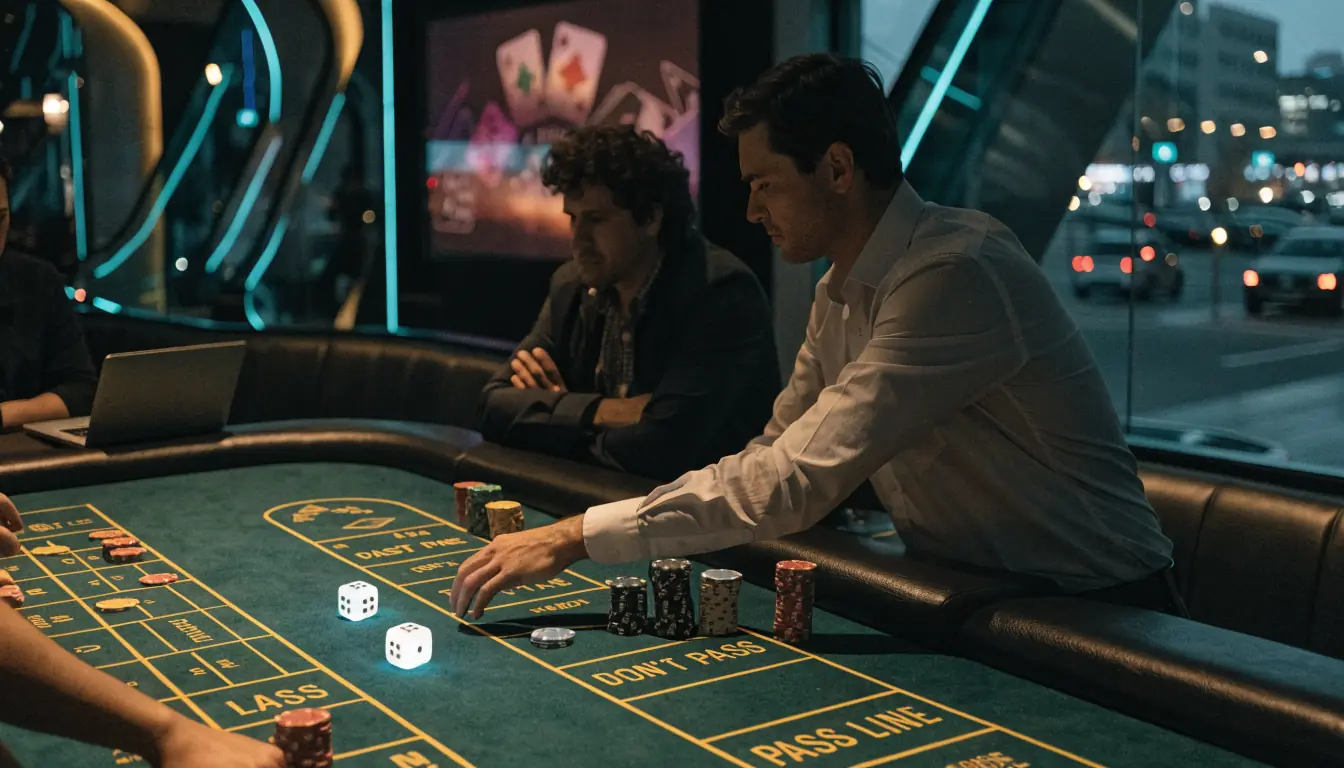
Every casino dice pit is built around craps. It’s the table with the raised rim, the stickman calling numbers, and a betting layout that looks intimidating until someone explains it once. Craps gets its own detailed treatment later in this piece, so I won’t repeat the mechanics here — just note that it’s the reason the pit exists at all. Other dice games tend to sit around it, filling space and catering to players who want something with fewer decisions per roll.
Sic Bo
Sic Bo is the one most Australian players haven’t heard of until they see it, usually tucked near the baccarat tables rather than the craps pit. Three dice, a table covered in betting options — small, big, specific totals, combinations — and a shake conducted either by hand-operated cage or an electronic shaker depending on the venue. It’s a game with Asian-market roots that found a permanent home in casinos with significant VIP or high-roller rooms, because the betting spread and volatility suit players who want big swings rather than grinding decisions. It’s simple to place a bet, harder to have any real read on which bet is good.
The classic two‑dice table game with a shooter, point system and multiple betting options.
Three dice with a grid of betting combinations, popular in Asian‑themed casino areas.
A simplified three‑dice cage game offering fast rounds and fewer betting choices.
Shooter acts as the house, with players betting against the dealer’s roll.
Chuck-a-Luck and cage games
Some venues run a simplified cousin of Sic Bo — three dice in a wire cage, spun by hand, with a much smaller betting layout. It’s less common on Australian floors than craps or Sic Bo, more likely to appear in smaller regional casinos or as a rotating feature rather than a permanent fixture. The appeal is speed: a full betting-and-resolution cycle takes seconds, which suits a casual crowd more than serious players.
Banker’s dice and private-table variants
A handful of venues run banker-style dice games — one shooter acting as the "house" for a round, other players betting against them — usually roped off in a high-limit area rather than on the main floor. These aren’t standardised across the country the way craps is; what’s offered depends entirely on the individual property and the state regulator’s approval of that specific table layout.
Why the mix differs by state
This is the part that surprises people who assume a "casino" is a casino wherever you find one. It isn’t. Each Australian state and territory runs its own separate gambling regulator, and each one approves table layouts and game rules independently. A Sic Bo table cleared for a Queensland property doesn’t automatically get a green light in South Australia. The regulator in Victoria, the VGCCC, goes further than most — it monitors wagering service providers regardless of which state they’re based in, checking compliance against the National Consumer Protection Framework rather than treating its jurisdiction as a walled garden. That’s a wagering-focused framework rather than a table-games one, but it signals the general posture: state regulators watch beyond their own borders when they think it’s warranted.
Land-based casinos themselves answer to state government regulators and law enforcement agencies — a completely separate structure from the federal body that handles online gambling. That split matters here because it explains the patchwork: there’s no single national rulebook saying "every casino must offer craps, Sic Bo, and cage dice." What ends up on a given floor is a product of that property’s state licence, its negotiated game list, and whatever the local regulator has signed off on. A room in Sydney and a room in Perth can legally offer a noticeably different dice line-up and both be entirely compliant.
What that means for a player walking in
Practically, it means "the casino dice game" isn’t a fixed menu you can memorise once. Expect craps everywhere that runs a proper table games floor. Expect Sic Bo at venues with a strong Asian-market clientele or a dedicated high-limit room. Everything past those two is a bonus, not a guarantee — cage games and banker variants show up unevenly, and a title running at one property might be entirely absent two states over.
None of this touches online access, which is a different legal picture covered elsewhere in this piece. What’s described here is strictly what’s physically on a casino floor, under whichever state regulator signed off on it, and why that list isn’t uniform from one address to the next.
State regulators such as Victoria’s VGCCC or NSW’s Liquor & Gaming Authority approve dice game layouts independently, so the available table games can vary between casinos in different states.
How to Play Casino Dice Games Online
Getting to a working table takes longer than the actual playing. Most of the friction is on the front end — finding a site, getting money onto it, working out which button rolls the dice. Once you’re in, the game itself is the easy part.
Finding a working site
Domestic Australian online casinos don’t exist, so the site will be offshore-licensed by definition. That’s not a red flag on its own — it’s the only model available. The practical problem is that ACMA has been ordering ISPs to block offshore gambling domains since November 2019, and by 2024 the blocklist had grown to 975 sites and affiliate pages. So the domain that worked last month might return a blocked-page notice today. Operators respond by mirroring under new addresses, which is why "casino not loading" is such a common complaint — it’s rarely the casino’s server, it’s the block.

Sites like Casino Mate, Fair Go, HellSpin, Joe Fortune, King Johnnie, Neo Spin Casino and PlayAmo are the names that keep circulating among Australian players precisely because they’ve adapted to this game of address whack-a-mole. That persistence is itself a kind of signal — a site still reachable after years of ACMA action has invested in staying reachable.
Setting up an account
- Register with an email and basic identity details. Age gating at signup should refuse anyone under 18 — if it doesn’t ask, that’s a site cutting a corner it shouldn’t.
- Fund the account. Card and crypto deposits are common on offshore platforms, though the mechanics of currency conversion and processing times aren’t something operators publish consistently — I’ve seen conflicting claims from site to site and no independent source that settles it.
- Verify identity before withdrawal, not before you play. This is the standard order on offshore sites, and it catches people who deposit, play, win, and then discover the ID check happens at the exit, not the entrance.
Getting to the dice game
Once inside the lobby, dice titles are usually filed under "table games" alongside blackjack and roulette rather than with pokies. Look there first. The interface itself is a scaled-down version of a physical table: a bet panel replaces chips, and a "roll" button replaces the throw. There’s no croupier to prompt you — the software waits indefinitely, which sounds convenient until you realise it also removes the natural pacing a live table imposes.
For anyone who wants to see the mechanics before risking money, most platforms offer a free-play or demo mode on the standard dice game. It runs on the same random number generator as the real-money version, so the odds you see are genuine — you’re just not betting on them. It’s a reasonable way to learn where the bet spot is before putting a balance behind it.
Playing a round
The sequence rarely changes across operators:
- Choose a bet type and stake.
- Confirm and trigger the roll.
- The RNG produces the outcome instantly — no physical dice, no delay.
- Winnings post to the balance automatically; losses simply clear the bet.
That’s it. There’s no shuffle, no wait for a croupier to clear the table, no queue. The trade-off for that speed is the absence of anything to watch except numbers changing on screen — which is either an advantage or the whole reason some players prefer the live tables covered elsewhere.
What to check before rolling anything
- The operator’s licence should be visible in the footer, not buried in terms and conditions.
- Wagering requirements on any welcome offer should be stated before you claim it, not after.
- If the site’s domain history is choppy — you found three different addresses for “the same casino” in your search — treat that as ordinary offshore behaviour, not proof of anything sinister. It’s the byproduct of the blocking regime, not necessarily the operator.
Understanding the Core Casino Dice Game
Strip away the table theatrics and a casino dice game is arithmetic dressed up as entertainment. Two or more dice, a set of numbered outcomes, a payout table that rewards some combinations more than others. That’s the whole engine. Everything else — the felt, the stickman’s patter, the animated dice tumbling across a screen — is packaging around a random number generator or a physical roll that behaves the same way every time: unpredictably, within known limits.
What separates a "core" dice game from craps, sic bo, or any of the branded variants covered elsewhere isn’t complexity. It’s usually the opposite. A basic dice game asks the player to predict a total, a range, or a specific number, then settles the bet against a fixed pay table. No shooter, no come-out roll, no sequence of bets that only makes sense once you’ve watched someone else play first. It’s the format most likely to appear as a standalone title in an online lobby, sitting next to the pokies rather than in a dedicated table-games section.
Core Dice Game Steps
Select a total or range you want the dice to land on and set your stake.
Press the “roll” button; the RNG instantly generates the outcome.
If the roll matches your prediction you receive the payout, otherwise the stake is lost.
Where it sits in the Australian market
Here’s the part operators don’t put in the promotional copy: none of this is available from a domestically licensed real-money site, because no such licence exists. The Interactive Gambling Act 2001 prohibits offering online casino games — dice included — to Australian residents, and there’s no application process an operator could complete to change that. What Australians actually access sits offshore, licensed elsewhere, reachable because the law targets the businesses supplying the games rather than the individuals playing them.
That distinction matters more for a "simple" dice game than it does for something like live roulette, because simplicity is exactly what makes these titles easy to slot into an offshore casino’s catalogue at low cost. A basic dice title needs minimal development work compared to a live-streamed table, so it tends to appear early in a new platform’s lineup — sometimes before the operator has sorted out much else. I’ve seen sites launch with a dice game and a handful of pokies and call that a "full casino experience." It isn’t. It’s the cheapest thing to build.
Offshore Risks
Offshore operators may be blocked by ACMA and offer no recourse for lost funds, so always verify the site’s licensing and blocklist status before depositing.
Regulators have been chipping away at the supply side rather than chasing individual games. By August 2025, according to iclg.com, ACMA had blocked 1,296 illegal gambling sites and affiliates since 2019, and 220 services had exited the Australian market voluntarily. A separate account, from boomaff.com, puts the figure at over 220 illegal services ceasing operations because of ACMA’s enforcement — close to the same number, different framing, and worth noting the two don’t describe identical measurements. Either way, the pattern is the same: enforcement hits the operator’s ability to advertise and connect, not the dice game itself, which keeps reappearing on whatever platform picks up where the last one left off.
Reading the mechanics honestly
A core dice game usually presents itself as "provably fair" or "instant" — both true in a narrow technical sense and both silent on the number that actually decides whether the bet was worth making. That number is the house edge, and it isn’t published for these titles in any Australian regulatory record because there isn’t one to check against. No public registry exists here the way it might on other markets; there’s nothing to look up.
What’s left is the shape of the bet itself: predict a total, get paid on a fixed schedule if you’re right. Understanding that structure — rather than the branding around it — is what separates an informed player from one reacting to whichever animation looks the most convincing.
Craps: The Classic Table Dice Game
Craps is the one dice game most people can picture even if they’ve never stood at a table: a crowd leaning over the rail, a shooter throwing against the far wall, someone shouting "seven out" at the wrong moment. It’s built around a shooter rolling two dice repeatedly, with a come-out roll that sets the tone for everything after it — a 7 or 11 wins outright, a 2, 3 or 12 loses, and anything else becomes "the point," a number the shooter has to repeat before rolling a 7 to keep the round alive. Everyone else at the table bets on what the shooter does next.
What sets craps apart from the other dice games covered elsewhere in this guide isn’t the dice themselves — it’s the table. Craps is a social, shared-outcome game. One roll decides everyone’s bet at once, which is a different rhythm from a single-player dice mechanic where you’re only ever betting against the house’s number generator. The layout, the stickperson calling the game, the side bets scattered around the felt — all of that is table craps. It doesn’t translate cleanly to a screen, and that gap matters more than it looks.
Where "real" craps actually exists
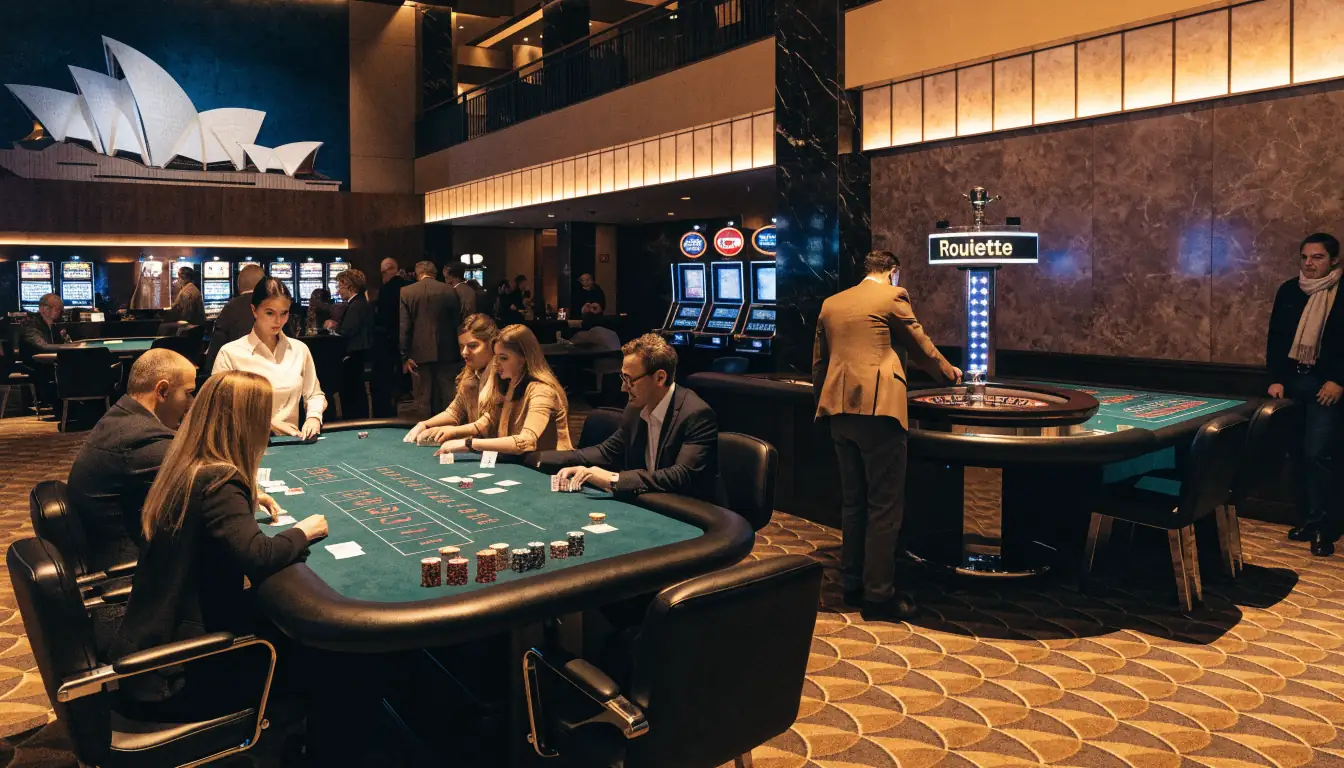
Land-based craps tables exist in Australian casinos and run under the same state-level regulation as any other physical table game — a croupier or stickperson managing the shoot, house rules posted at the table, standard odds bets available the way they would be anywhere else in the world. That side of craps isn’t controversial and isn’t the subject here.
Live craps
A streamed table where a real dealer throws physical dice in real time, presented to online players via video feed.
The online version is a different animal entirely, and this is where craps gets misrepresented constantly. What’s marketed as "live craps" or "real casino dice" online is almost always a random-number-generator table, dressed up with dice animations, not an actual person throwing actual dice on an actual table with a camera on it. Genuinely live-dealt craps — a real shooter, real dice, streamed to a player’s screen — is a niche offering even where it exists, and it changes the legal picture in a way marketing copy tends to skip over. Live, in-play betting online is illegal in Australia, while placing a live bet by phone is not. That distinction sits awkwardly next to a website telling you to "join the live craps table" from your phone browser. The word "live" gets used loosely, and on a market where live betting has a specific legal meaning, loose isn’t harmless — it’s the difference between a legitimate description and a claim nobody can actually stand behind.
Strategy, and what that word is doing there
"Casino dice strategy" gets searched a lot around craps, and it’s worth being blunt about what strategy means at this table. The pass line and don’t-pass bets carry a fixed house edge that doesn’t move regardless of how the shooter throws. Odds bets, once a point is established, are the only wager at the table paid at true odds — no house edge attached to that portion of the bet. That’s the entire "strategy" conversation: which bets carry an edge and which briefly don’t. Betting systems, hot-dice theories, watching for a shooter’s rhythm — none of it changes what the dice do next. The dice don’t remember the last roll.

Craps rewards knowing the bet types, not reading the table. That’s a smaller, plainer truth than the systems sold around it suggest, but it’s the one that holds up after the round ends.
Casino Games That Incorporate Dice
Dice do not only headline their own tables. A fair number of casino titles treat dice as one ingredient among several, and the distinction matters more than it looks. A pure dice game — craps, sic bo, the simplified versions covered elsewhere on this page — resolves entirely on the roll. Games that "incorporate" dice use them as a mechanism inside something bigger: a board-style progression, a bonus trigger, a multiplier decided by a virtual throw sitting next to reels or cards.
Pokies are the obvious example. A slot themed around a dice motif might use an actual roll animation to decide a bonus round, feed a progressive feature, or set a multiplier before the free spins start. The dice there are decorative until they are not — they still determine an outcome, just not the whole game. I have seen the same mechanic dressed up as everything from a Vegas-strip theme to a fantasy adventure, and underneath it the random number generator is doing what it always does, dressed as a die.
Some hybrid table formats borrow dice for a side bet layered on top of a card game, letting a player wager on a roll while the main hand is still being dealt. Others use dice purely for pacing — deciding turn order or bonus frequency rather than the payout itself. None of this is craps in disguise; it is dice used as a supporting mechanic rather than the main event.
- Verify the operator’s offshore licence and blocklist status.
- Use the demo mode to understand game mechanics before wagering.
- Keep records of deposits and withdrawals for personal tracking.
- Assume a site is legal just because it displays a “licensed” badge.
- Deposit large sums without first checking the site’s reputation.
- Ignore ACMA warnings about blocked domains.
What ties all of these together on the Australian market is the same regulatory backdrop that covers dice-only games. The Interactive Gambling Act 2001 does not carve out an exception for a slot because its bonus round happens to use a die instead of a wheel. If the underlying product is an online casino game, it sits under the same prohibition, and the same offshore-hosting reality applies.
It is also worth naming something that rarely gets said plainly: the regulator’s reach over advertising these hybrid titles is uneven. ACMA can request that a site offering prohibited games be blocked, but it has no power to force platforms like Facebook to pull ads targeting Australian users, because the law only bans advertising "in Australia" — a wording gap that leaves plenty of promotional material for dice-featuring pokies circulating regardless.
What Casino Games Use Dice and Why
Ask what a casino dice game actually is, and most people picture craps or Sic Bo. Fair enough — those are the pure form, dice as the entire mechanism. But the honest answer to which casino games use dice is broader than that, and the "why" behind it says more about game design economics than about dice themselves.

Dice get used wherever a designer needs a random number generator that players can watch happen. That’s the whole trick. A die tumbling and landing is legible in a way that a shuffled deck or a spinning reel isn’t quite — you see the physics resolve in front of you, and the outcome feels earned rather than dealt. Craps built an entire table culture on that legibility: shooters, side bets, a whole crowd watching one roll. Sic Bo borrowed the same logic and simplified the wagering into a grid. Board-style casino games use dice for movement and stakes because the physical roll is the whole point of sitting at the table.
Where it gets less obvious is the games that only borrow the dice as a mechanic bolted onto something else — a bonus trigger in a slot, a multiplier decided by a virtual roll in a live-dealer format. There, dice aren’t the game; they’re a randomness device the designer picked because it’s cheap to animate and instantly understood. No explanation needed for what a rolling die means.
None of that changes what happens if something goes wrong at an offshore table, dice-based or otherwise. The Australian Communications and Media Authority can investigate an operator running these games illegally, and it can block the service — but it has no mechanism to get anyone’s money back or arbitrate a dispute over a disputed roll. Its tools sit at the level of civil proceedings, notifying border agencies about the people behind an offending operator, and coordinating with regulators overseas. That’s aimed at the operator’s existence in the market, not at resolving what happened on a particular hand or roll.
Worth remembering before treating any dice-based table — pure or hybrid — as just another game with house rules and a support line to call.
Main takeaway
Online casino dice games are legally prohibited for Australian operators, leaving players to rely on offshore providers at their own risk.
Official Rules for Casino Dice Games
There isn’t one rulebook that covers every dice game a casino puts on the floor or on a screen. Craps has its own procedure, sic bo has another, and the simplified dice games some platforms brand as their own house version follow whatever the software provider decided to encode. What stays constant across all of them is the structure: a defined set of outcomes, a fixed way of resolving a roll, and payout tables tied to those outcomes rather than to anything a dealer or the platform decides on the fly.
That’s the part worth separating from house edge. Rules describe what happens when the dice land a certain way. House edge describes how that outcome translates into who keeps the money over time. A rulebook won’t tell you the edge, and a discussion of edge won’t tell you how the game is actually resolved — they answer different questions, and conflating them is how marketing copy ends up sounding more generous than the mechanics actually are.
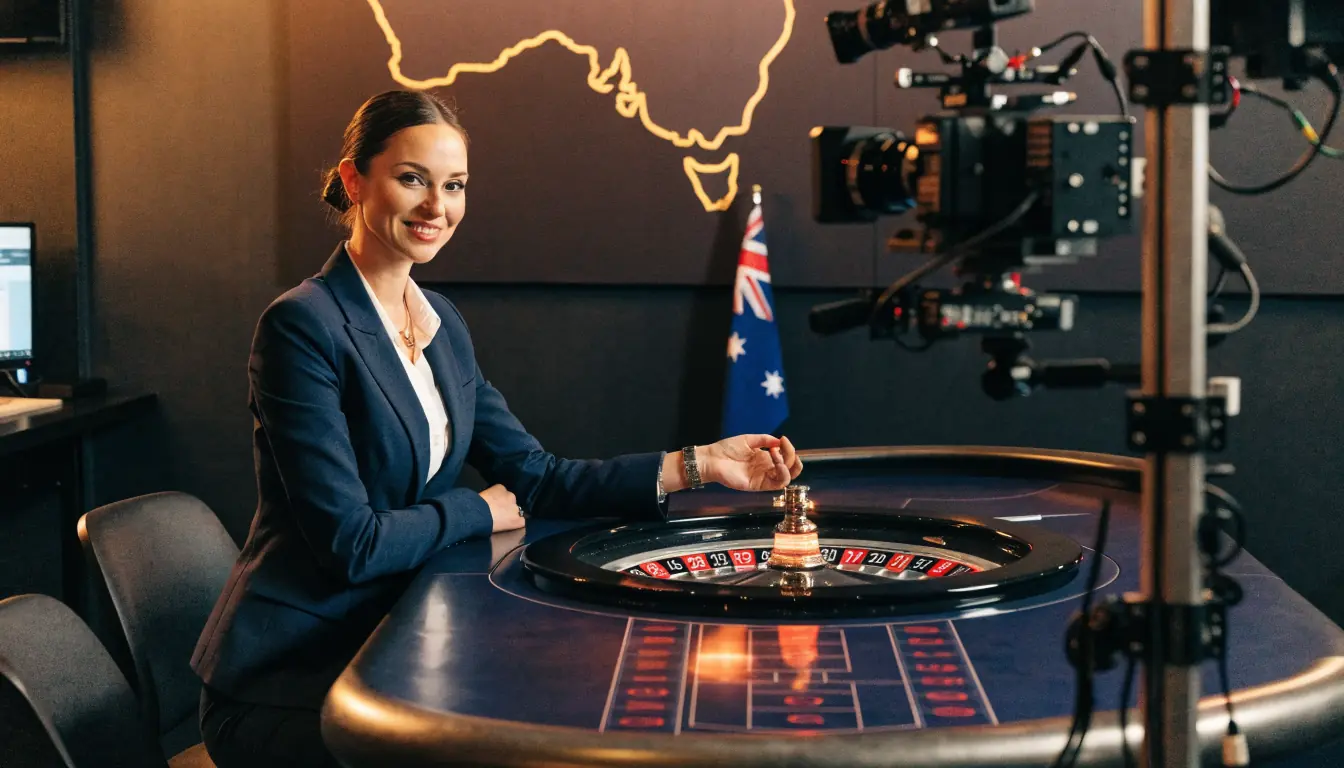
For land-based tables, the rules are set by the venue and enforced by the croupier running the game. Online, the rules live inside the software, and there’s no equivalent of a pit boss to appeal to if something looks off.
There’s no domestic regulator publishing a single official rulebook for dice games aimed at Australian players — because there’s no domestic licence for online casino games in the first place. What oversight exists is enforcement-focused rather than rules-focused: the ACMA’s role runs to issuing blocking notices against offending sites and, where relevant, letters to software developers treated as ancillary to a breach, not to certifying how a dice game should be played. Rule integrity, in practice, is whatever the offshore licence behind the platform requires.
Live Dice Games: What Australian Players Need to Know
A live dice table streamed from a studio somewhere offshore looks reassuringly like the real thing — a croupier, a felt layout, a camera angle that catches every roll. "Live" here does the same work it does everywhere else in the casino vocabulary: it signals authenticity. What it doesn’t signal is legality.
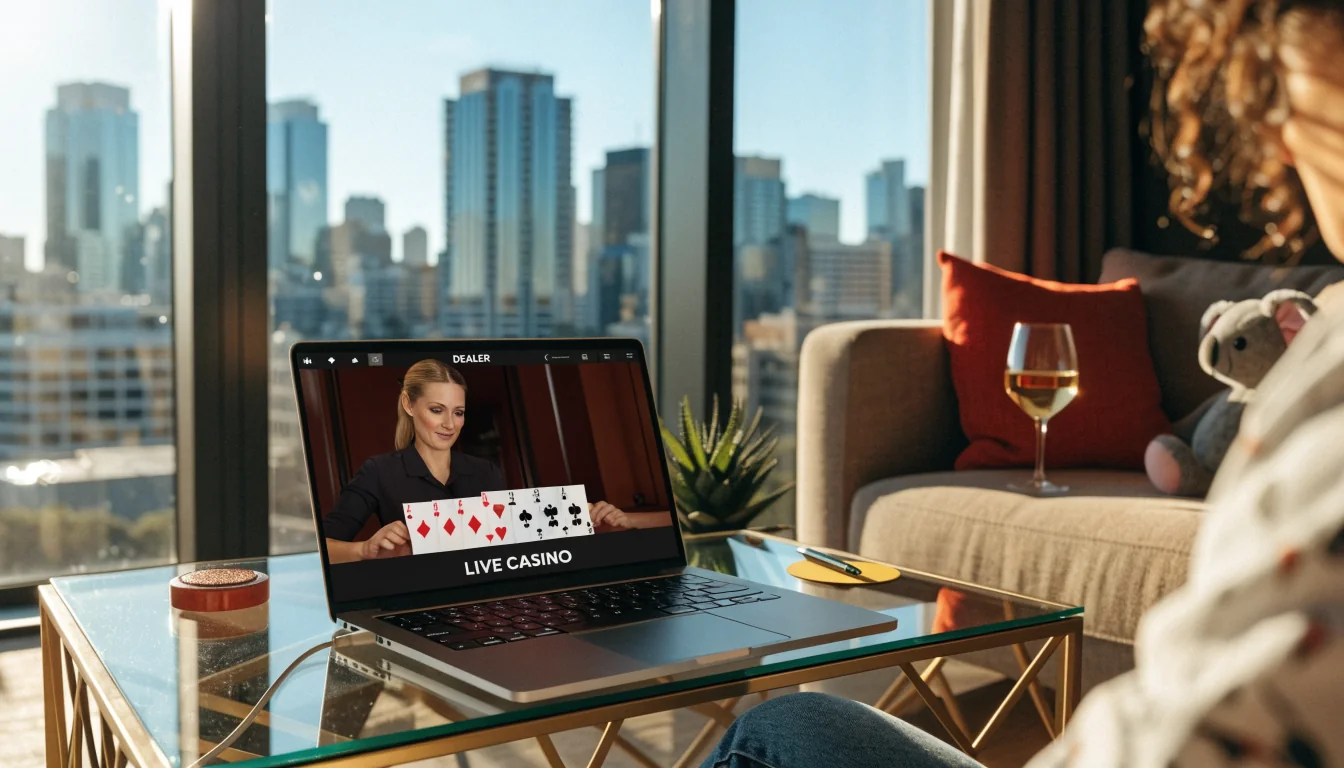
Pre-recorded or random-number dice games and live-streamed ones fall under the same prohibition. The Interactive Gambling Act 2001 doesn’t carve out an exception for a human dealer on the other end of a webcam. If anything, live dice sits closer to the regulator’s line of sight, since it’s harder for an offshore operator to dress a live-streamed casino product up as something else.
That distinction matters because ACMA has shown it won’t just quietly block a website. Where illegal gambling products are being offered to Australians — live tables included — the agency has referred matters to the Australian Federal Police and issued warning notices to the operators involved.
None of that touches the player sitting at home. The exposure sits with whoever is running the stream.
Where You Actually Roll the Dice in Australian Casinos
Physical dice tables exist in a completely different regulatory world from anything discussed so far. The game where you actually pick up dice and throw them belongs to licensed land-based venues — state-regulated casino floors in cities like Melbourne, Sydney, Perth, Brisbane. A croupier runs the table, stakes are settled in cash or chips at the pit, and the whole operation sits under a state gaming licence, not the federal framework that governs — and blocks — online casino dice games.
That split matters more than it looks. State regulators like the VGCCC or Liquor & Gaming NSW have real authority over what happens on a casino floor: they license the venue, audit the tables, discipline the operator. The same regulators have essentially no reach over an offshore site offering a "digital craps table" to someone sitting on their couch in Melbourne. Different rulebook, different enforcement, different consequences for getting it wrong.
So the honest answer to "where do you throw real dice" is: a licensed venue, on a table, with a croupier watching the count. Everything else — RNG tables, live-streamed shoes — is a simulation of that room, not the room itself.