Gambling Casino Sites Australia: Slots and Pokies Guide
 Available in AU
- Slots Landscape in Australia 2026
- Understanding Slot Gambling Mechanics
- Slot Machines and Their Role in Australian Casinos
- Casino Game Variety Beyond Slots
- Pokies in Australian Pubs and Clubs
- Cryptocurrency and Bitcoin in Australian Online Casinos
- Playing for Real Money: Risks and Regulations
- Internet and Ethereum‑Based Gambling Platforms
- Online Casino Operations in Australia
- Top Australian Casinos and How to Play Safely
Slots Landscape in Australia 2026
Ask someone who’s spent time around gaming floors what “slots” means in Australia and you’ll get a correction before an answer. Here, the machine is a pokie. The word slots belongs to a different conversation entirely — the one about online gambling casino sites Australia audiences search for, expecting to land on something they can legally join. That gap between the term people type and the product that actually exists locally is the first thing worth understanding about this market, because it shapes everything else in it.
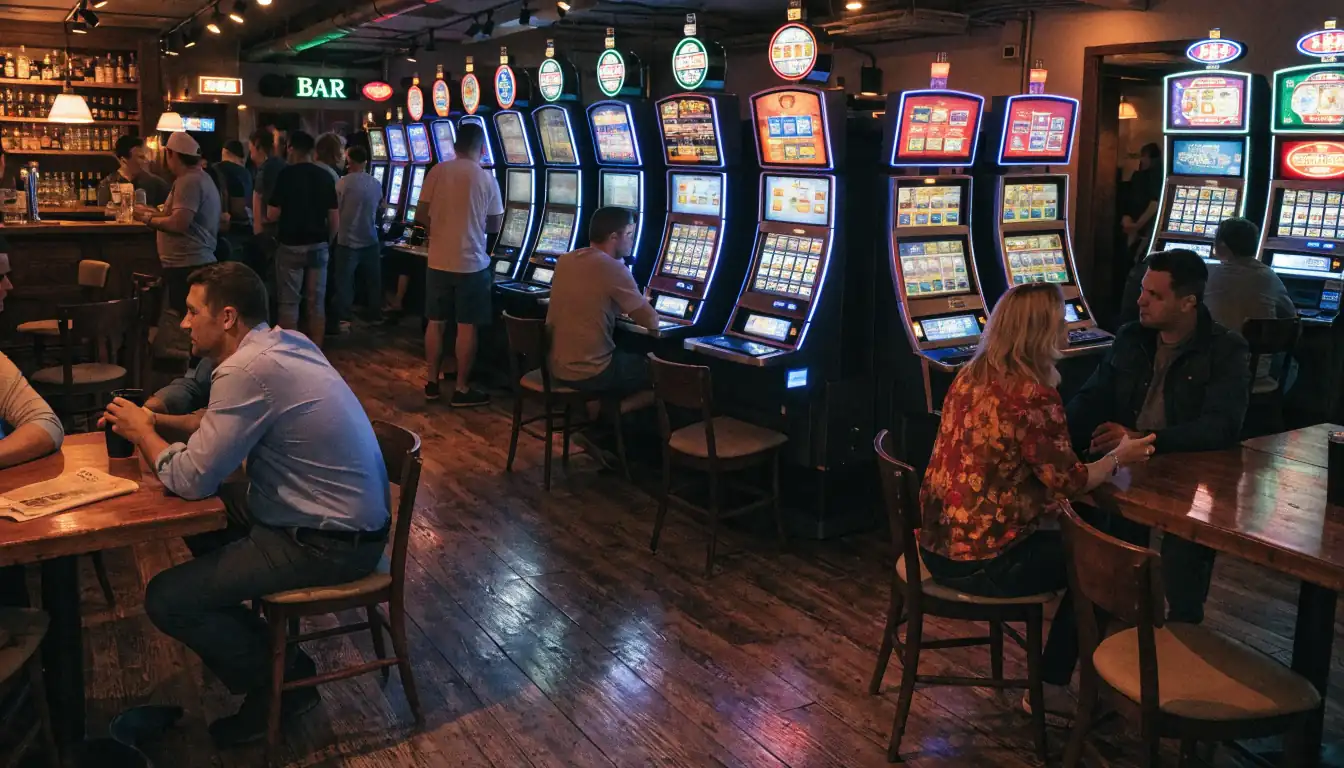
There’s no domestic online slots industry to speak of, in the sense of licensed, locally regulated real-money slot platforms. What exists, and exists at enormous scale, is the land-based pokie network — machines sitting in pubs, clubs, and casinos, run under state and territory licensing, generating numbers that dwarf most people’s assumptions about how big this gets.
Size, by the numbers that exist
Australia holds a share of the world’s gaming machines that’s wildly out of proportion to its population. The country is home to 3% of the world’s pub and club poker machines, while accounting for just 0.3% of the global population — a tenfold overrepresentation that’s been cited repeatedly by researchers looking at gambling harm. One source, complyadvantage.com, put the figure even higher, suggesting Australia holds about 18% of the world’s poker machines; the discrepancy between that number and the 3% figure is worth flagging rather than smoothing over, since different sources appear to be counting different things — possibly poker machines broadly versus pub and club EGMs specifically. I won’t pretend the two numbers reconcile cleanly. They don’t, and reporting them as if they did would be worse than admitting the ambiguity.
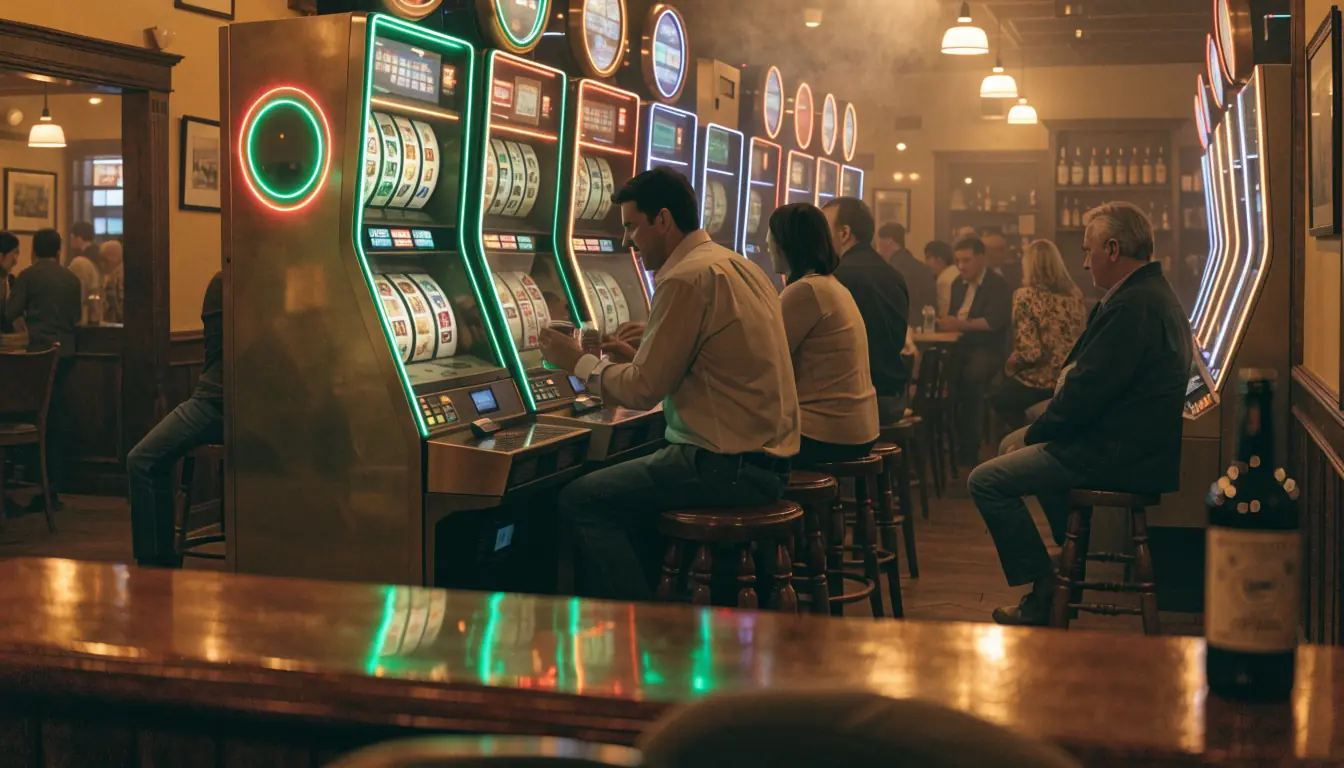
What’s not in dispute is the money moving through these machines. Australians bet almost AUD$150 billion on electronic gaming machines in the 2020-2021 financial year. Player losses on that turnover came to AUD$12 billion — the difference between what goes in and what the machines are structured to return. Broken down per person, the loss came to AUD$608 for every Australian that year, adult or not, gambler or not. That’s a national average, not a per-player figure, and it’s the number that tends to land hardest with people outside the industry: it means the losses are spread thick enough that the average citizen’s share of them is triple digits.
More recent turnover figures push the scale further. According to one industry source, pokies generated $191.2 billion in Australian gambling turnover in 2023. I’m citing that as a single reported figure rather than a settled market size, because turnover estimates for gambling machines get calculated differently depending on who’s counting and what counts as "turnover" versus "revenue" versus "losses." Treat it as a data point from one source, not gospel.
Where the tax money goes
Gambling isn’t just a private habit in Australia — it’s baked into public finance. In the 2015-16 financial year, gambling revenue made up 7.7% of state and territory taxation revenue. That’s not gambling revenue as a share of all government income; it’s specifically the slice states and territories collect through gambling taxes and levies, and it’s substantial enough that pokie revenue in particular functions as a quiet pillar of club and pub economics, and by extension of state budgets. I’ve seen how that dependency shapes policy conversations from the inside — nobody wants to be the one who proposes cutting a revenue stream that funds services, even when the same stream is the one causing the harm those services sometimes have to treat.
Pokies versus everything else
The formal name for what most people call a pokie is an electronic gaming machine, or EGM, and EGMs are everywhere — pubs, clubs, and casinos all run them, though under somewhat different rules depending on the venue type and jurisdiction. This is the format that defines Australian gambling in a way that table games never have. Blackjack, roulette, poker tables — these exist in the licensed casino venues, but they don’t carry the volume, the machine count, or the per-capita loss figures that pokies do. A pokie doesn’t need a dealer, doesn’t need a table, doesn’t need a minimum number of players to run. It sits in a corner of a suburban club and takes bets one person at a time, all day, every day the venue is open. That structural difference — no staffing bottleneck, no seating limit — is a large part of why the machine count and the turnover numbers got this large in the first place.
Table games, by contrast, are capped by physical infrastructure: a casino only has so many tables, so many dealers, so many hours in a shift. Pokies scale differently. A club adds floor space, it adds machines. That’s the economic logic underneath the 3% (or, per the other source, 18%) global share — Australia didn’t get there through casino table games. It got there through machine density in venues that aren’t casinos at all.
What "slots" actually points to here in 2026
Searching for gambling casino sites in Australia in 2026 usually means looking for somewhere to play slot-style games for money online. That search runs into the legal wall fast: there’s no licensed domestic pathway for online casino slots, and nothing in the pokie statistics above changes that — the AUD$150 billion in EGM betting, the $608 per-capita loss, the 7.7% tax share, all of it belongs to physical venues operating under state and territory gambling law, not to online slot platforms. The scale of the pokie market is real and well documented. Whether that scale translates into a legal online equivalent is a separate question, and the regulatory answer to it belongs to a later section rather than this one.
What matters here, before getting into mechanics or machine specifics, is the shape of the landscape itself: a huge, tax-relevant, pub-and-club-dominated pokie economy sitting alongside a much smaller casino table game sector, with the term "slots" mostly imported from overseas search habits rather than describing anything that operates the same way locally. Understanding that distinction early saves a lot of confusion later — when the conversation moves to how the machines actually work, or where online play fits into a market that doesn’t licence it domestically.
Understanding Slot Gambling Mechanics
Strip away the branding and every slot machine does the same job: it takes a bet, runs a random outcome, and returns some fraction of what went in — averaged across thousands of spins, not any single one. Understanding that structure matters more than understanding any particular game’s theme, because the mechanics are what decide how much money leaves a player’s pocket over time, not the graphics.
How the bet actually works
A spin is a discrete transaction. The player sets a stake, the machine’s random number generator produces a result, and the outcome is settled immediately — win, loss, or occasionally a bonus trigger. There’s no memory between spins. The machine doesn’t "owe" a win because of a losing streak, and it doesn’t "know" a jackpot is due. That’s a mechanical fact, not a philosophical one, and it’s the first thing that separates how these machines actually behave from how players tend to describe them afterward.
The Interactive Gambling Act of 2001 prohibits offering online casino games, including slots, to Australian residents.
Betting structures vary in shape but not in principle. Some machines let a player adjust the number of lines or ways a bet covers; others fix the bet at a flat bank per spin. Higher stakes multiply the payout table but not the underlying odds — the maths behind the reels doesn’t change because the bet size did. What changes is exposure: a player staking more per spin burns through a bankroll faster if the run is bad, and clears it faster if it’s good. Volatility, not stake size, decides how bumpy that ride feels.
Why the loss column is the honest number
Australians bet almost AUD$150 billion on electronic gaming machines in the 2020–2021 financial year, and lost AUD$12 billion of it. That gap between turnover and loss is the whole business model in two numbers. The AUD$150 billion figure looks like activity; the AUD$12 billion figure is what actually left players’ accounts and didn’t come back. Per capita, that loss worked out to AUD$608 for the year — an average, so it flattens out everyone from someone who never played to someone who played constantly, but it’s a real figure, not a marketing one.
I’ve watched people mistake turnover for stakes at risk, as if betting $150 billion meant losing anywhere near that much. It doesn’t. Most of that amount is money cycling — winnings re-bet, re-won, re-bet again — before the house edge eventually claims its share. The $12 billion is the only number that matters if the question is "how much did this cost players," and it’s worth holding onto whenever a promotional line talks about "player-friendly" odds.
The player experience layer
What a player experiences during a session — near-misses, bonus rounds, escalating stakes prompts — is built on top of the mechanical layer, not separate from it. Near-miss displays don’t change the odds of the next spin; they’re a presentation choice sitting on top of a random result. Bonus features add variance and can extend session length without changing the long-run return. None of this is inherently dishonest, but it’s worth naming plainly: the entertainment layer and the maths layer are different things wearing the same interface.
The regulatory backdrop
The mechanics of slot betting in Australia sit inside a specific legal timeline. The Interactive Gambling Act was passed on 28 June 2001, and it’s the reason the mechanics described above look different depending on where they’re encountered — a machine on a gaming floor operates under one set of rules, and an online version of the same mechanic falls under a completely different, more restrictive regime. That split is a legal fact, not a design choice by any operator.
One number that does work in the player’s favour: gambling winnings are not taxed in Australia. Whatever comes back from a session, whatever the maths eventually pays out, the tax office doesn’t take a further cut of it. That’s not true everywhere, and it’s one of the few genuinely player-favourable facts in this entire mechanical picture.
Legal risk
Providing or promoting real‑money online slot games to Australian players breaches the Interactive Gambling Act and can lead to fines or prosecution.
Gambling revenue itself is not a rounding error for government either — in the 2015–16 financial year it made up 7.7% of state and territory taxation revenue. That figure belongs to the states collecting duty on the machines, not to the mechanics of an individual spin, but it explains why the underlying structure of slot betting hasn’t been redesigned to be gentler on player bankrolls. The current mechanics work exactly as intended.
Understood this way, a slot bet isn’t a mystery box. It’s a fixed-odds transaction dressed in variable presentation. The presentation changes constantly. The transaction underneath it hasn’t changed in decades.
Slot Machines and Their Role in Australian Casinos
Walk onto a casino floor and the machines look almost identical to the ones in a suburban club. Same lights, same reel animations, same jingles when a line hits. What’s different is what’s sitting behind them: a compliance framework built specifically because these boxes handle cash at a volume most retail businesses never see.
That volume is the whole story. A machine that accepts notes, pays out credits, and lets a player walk away with cash — repeated hundreds of times a day, across hundreds of machines — creates a transaction environment with limited traceability. Nobody at the bank knows where the money came from. Nobody at the cage necessarily knows either, unless the venue has built systems to ask.
Why regulators keep coming back to these machines
Public inquiries and sector guidance have repeatedly flagged casino slot machines as a major AML risk area, and the reasoning isn’t abstract. It comes down to three patterns investigators see over and over.
Cash placement with minimal play. Someone feeds a large amount of cash into a machine, presses the button a handful of times, then cashes out. The "gambling" is a formality — the machine’s real job in that moment is converting physical cash into a clean payout ticket. I’ve watched pit staff clock this in real time: a player who shows zero interest in the game itself, checking their phone between spins, is not playing for entertainment.
Purchasing winning tickets. Someone else’s jackpot ticket gets bought off them, cash changes hands privately, and the buyer redeems it at the cashier as if they’d won it. The paper trail says "winnings." The reality is a transfer that never touches a bank.
Structuring across venues. Rather than moving a large sum through one casino, it gets split into smaller amounts spread across several venues, several sessions, sometimes several people. Each individual transaction looks unremarkable. It’s only when you connect the dots across properties that a pattern shows up — which is exactly why single-venue monitoring isn’t enough on its own.
None of this requires a criminal mastermind. It requires a machine that takes cash, pays out credits, and doesn’t ask questions — which is precisely what a slot machine is built to do.
What the machine can and can’t see
A standalone slot machine has no idea who’s feeding it money. It counts notes and dispenses credits. Everything AML-relevant happens around the machine, not inside it: the cashier who issues the payout, the pit supervisor who notices the same face at three different machines in an hour, the system that flags a ticket redemption against the venue’s usual patterns.
This is where "compliance" as a word gets tested against what it actually means on the floor. It’s not a poster near the entrance. It’s a cashier trained to ask why someone’s redeeming a ticket for cash within minutes of a small buy-in, and a system behind them that logs it whether they ask or not.
The physical machine hasn’t changed as much as the paperwork around it
The reels, the RNG, the payout mechanism — none of that is where the AML fight happens. It happens in the record-keeping: who inserted how much cash, when, at which machine, and whether the pattern that follows looks like play or looks like laundering. A machine on a casino floor generates that record automatically. A machine in a pub with less oversight generates far less of one — a distinction worth sitting with rather than glossing over.
The uncomfortable part, if you’ve worked compliance in this space, is that the machine itself is neutral. It doesn’t care if the cash is clean. Every safeguard that matters sits in the layer humans and systems build around it — and that layer is only as good as the venue’s willingness to fund and staff it properly.
Casino Game Variety Beyond Slots
Pokies dominate the numbers — by one account they generated $191.2 billion in Australian gambling turnover in 2023, and poker machines are on record as the most harmful form of gambling in NSW. But walk into any licensed venue and the floor isn’t wall-to-wall reels. There’s a whole other economy running alongside it, one that gets less attention precisely because it doesn’t move the same volume.
Table games are the obvious contrast. Blackjack, roulette, baccarat, craps — games where a dealer or a wheel sets the pace rather than a random number generator running thousands of cycles an hour. The math is different, the social dynamic is different, and so is who shows up to play. A pokies room is mostly solitary. A blackjack table is not. People watch each other’s hands, argue about basic strategy, tip the dealer. That’s a different product being sold, even if it’s sitting in the same building and taxed under the same state gambling revenue rules — revenue that made up 7.7% of state and territory taxation in 2015-16, back when the mix between machines and tables looked somewhat different than it does now.
Card games proper — poker in its tournament and cash-game forms — sit in yet another category again. Poker isn’t really "the house against you." The venue takes a cut of the pot or charges table fees; the actual money moves between players. That distinction matters more than it sounds. It means the skill ceiling is real, and it means a "high roller" poker room and a pokies lounge two floors down are, structurally, almost unrelated businesses wearing the same casino licence.
Physical electronic gaming machines found in pubs, clubs and casinos; regulated by state licences and generate the bulk of Australian gambling turnover.
Offshore digital slot platforms accessed via the internet; not licensed in Australia and operate outside the domestic regulatory framework.
Pokies feed state and territory tax revenue (about 7.7% of their taxation take in 2015‑16); online slots contribute no tax to Australian budgets.
Land‑based venues are subject to Australian AML and responsible‑gaming rules; online operators are not overseen by Australian regulators.
Where slots-style products fit into all this
None of this is available to Australians as an online product in the way it’s available in a physical casino. The Interactive Gambling Act, passed on 28 June 2001, doesn’t distinguish kindly between a digital roulette wheel and a digital slot reel — both fall under the same prohibition on online casino-style games for the Australian market. So the "variety beyond slots" that exists in land-based venues doesn’t carry over to a licensed local website, because there isn’t one. Whatever a person finds calling itself an online blackjack table or online baccarat room aimed at Australian players is operating outside any domestic framework, full stop.
That’s worth sitting with for a second, because the marketing language around these products borrows heavily from the reputable end of the industry. "Live dealer," "VIP tables," "high-limit room" — all real things, all things that exist in Sydney and the Gold Coast and Melbourne’s actual casino floors. Online, the same words get attached to operators with no accountable presence in Australia at all.
What actually varies, and what doesn’t
Winnings from any of these games — pokies, blackjack, poker, whatever — aren’t taxed as income in Australia. That part is consistent across the whole gambling landscape, table games included. It’s one of the few things that stays the same no matter which game a person is looking at.
What doesn’t stay the same is risk profile. A pokie session and a blackjack session and a poker tournament put different amounts of money at stake, at different speeds, with different odds of walking away even. Lumping them together as "casino games" flattens a distinction that actually matters when someone’s deciding where their time and money go. The pubs-and-clubs machine floor, covered next, is its own animal again — closer in spirit to a casino’s slot bank than to its card room, but legally and physically a separate world.
Pokies in Australian Pubs and Clubs
Walk into any suburban club in New South Wales on a weeknight and the pokies room is usually the brightest, busiest part of the building. That’s not an accident of design. Pubs and clubs built their business models around these machines long before online slots existed, and the two markets still run on completely different logic.
NSW alone has roughly 95,800 pokies spread across its pubs and clubs — a density that makes the state one of the most saturated gambling markets in the country. Clubs in NSW pulled in $1.945 billion in net profit from pokies in the space of six months between December 2017 and May 2018. That’s not turnover, that’s profit, after payouts. It tells you what the machine is actually for: it’s the club’s revenue engine, not a side amenity next to the bistro and the bowling green.
Formally these machines are electronic gaming machines, EGMs. "Pokies" is what everyone actually calls them, and the term matters because it separates this market from casino slot machines. A casino slot sits inside a licensed gaming floor, monitored under casino-specific rules, often part of a bank of machines from a handful of major suppliers. A pokie in a club sits in a room that also serves counter meals and hosts trivia night. Same core mechanism — spin, pay table, return to player — but a different regulatory environment, different ownership structure, and a different relationship with the community around it.
Why pubs and clubs, specifically
Clubs in Australia grew out of returned servicemen’s leagues, bowling clubs, and workers’ associations — member-owned organisations that needed a funding source once membership fees stopped covering the clubhouse. Pokies filled that gap decades ago and never left. The machines subsidise cheap meals, sports sponsorships, and community grants, which is exactly why suggestions to remove them meet resistance that has nothing to do with gambling policy and everything to do with who pays for the golf club’s greenkeeper.

Pubs run a simpler version of the same arithmetic. A venue with a handful of machines in the corner near the bar doesn’t need them to run the business, but they turn a marginal room into a profitable one.
The scale most people don’t picture
Australia holds around 18% of the world’s poker machines, according to one industry analysis — a figure worth naming carefully, because the exact share shifts depending on who’s counting and when. What doesn’t shift is the basic picture: a country with a small population runs an outsized share of the planet’s gaming machines, and the vast majority of them sit in exactly the kind of local pub or club described above, not in a casino.
That concentration is also why AML scrutiny keeps circling back to this specific setting. A casino slot floor has surveillance staff, cash-handling procedures, and a compliance department watching the room. A pokies room in a suburban club, running on cash and player loyalty cards, doesn’t carry the same weight of oversight — which is precisely the gap regulators have spent the last few years trying to close.
Cryptocurrency and Bitcoin in Australian Online Casinos
Every few months someone asks whether Bitcoin fixes the problem of playing casino games from Australia. It doesn’t. The Interactive Gambling Act, passed on 28 June 2001, prohibits offering online casino games to Australian residents regardless of what currency changes hands. A blockchain ledger doesn’t rewrite Commonwealth law. What it does is change who can see the transaction, and that’s a different thing entirely.
Here’s the part operators don’t spell out on their homepage: the law targets the business offering the service, not the person clicking play. So an Australian using Bitcoin at an offshore casino isn’t committing an offence by playing. The casino, if it’s marketing to Australians or accepting them as customers, is the one operating outside the law — and no coin changes that.
Why crypto gets pitched as the "solution"
The pitch usually goes: no bank involved, no paper trail, faster payouts. All true, technically. What’s left unsaid is that removing the bank doesn’t remove the regulator’s interest — it just removes one of the tools that would normally flag the activity. That’s the actual selling point being marketed, dressed up as convenience.
Compare that with where the industry is actually heading domestically. Cashless and account-based systems in pokies venues are being adopted specifically because they improve traceability — the opposite direction from what an anonymous crypto wallet offers. One part of the gambling sector is moving toward more visibility, while offshore crypto casinos sell the promise of less. Both can’t be the future at once.
Tax doesn’t change the legal picture
Gambling winnings aren’t taxed in Australia, crypto or otherwise, which sometimes gets mistaken for the government having no interest in how people gamble. It’s not indifference — it’s a structural choice. Gambling revenue made up 7.7% of state and territory taxation revenue in 2015-16, and that money comes from licensed operators paying duties on regulated products like wagering and lotteries, not from taxing a punter’s personal winnings. An offshore Bitcoin casino sits entirely outside that revenue stream. It pays nothing to any Australian jurisdiction, licensed or not, because it isn’t licensed here at all — there’s no domestic licence category for online casino games to begin with.
What actually changes with crypto, and what doesn’t
| Stays the same | Changes with crypto |
|---|---|
| Legality of the operator offering casino games to Australians | Payment rail used to move funds |
| Player’s position under the Interactive Gambling Act | Speed and privacy of the transaction |
| Absence of a domestic licence for online casino products | Who can trace the money afterward |
The currency is new. The legal footing under it isn’t.
Playing for Real Money: Risks and Regulations
Real money is the whole point, and it’s also where the legal picture gets strict rather than vague. The Interactive Gambling Act 2001 prohibits online casino games — slots, roulette, blackjack — from being offered to anyone in Australia. No domestic operator can legally take a real-money slot bet from an Australian resident. That’s not a technicality buried in a terms page; it’s the reason every "Australian online casino" list is actually a list of offshore sites.
Playing at one of those offshore operators isn’t illegal for the individual. The law was written to target operators, not the person clicking "spin." That distinction gets used a lot in marketing copy, usually dressed up as reassurance. It’s accurate. It’s also not the same as saying the activity is regulated, protected, or backed by any local licence — because none exists for this product.
The money side of the risk is the part people underestimate. Electronic gaming machines alone accounted for close to AUD$150 billion in bets across FY 2020‑2021, with players losing AUD$12 billion of that. Spread across the population, that works out to roughly AUD$608 lost per person for the year. Those numbers come from regulated, onshore machines with reporting requirements attached. Offshore real-money slot play carries the same betting mechanics and loss curve, minus any of that oversight.
No licence to display. No regulator to complain to. No dispute process backed by Australian law.
That’s the actual risk profile behind "real money" — not the bet size, the jurisdiction.
Internet and Ethereum‑Based Gambling Platforms
Ethereum gets pitched as the "next step" after Bitcoin in gambling payments — smart contracts, provably fair outcomes, instant settlement. What that pitch skips over is jurisdiction. The Interactive Gambling Act, passed on 28 June 2001, does not distinguish between a casino that takes Bitcoin, one that takes Ethereum, and one that takes a Visa card. It bans the activity — online casino games offered to Australian residents — not the rail the money travels on.
So an "Ethereum casino" marketed to an Australian audience is not a new category of legal product. It is the same prohibited offer, wrapped in newer infrastructure. Smart contracts don’t change who the operator is or where the game is hosted. They change how a bet gets recorded, which matters for the platform’s own bookkeeping more than for the player’s legal standing.
There’s a real difference worth naming, though, between Ethereum-style platforms and the account-based systems used in land-based pokies venues. Cashless and account-based machines improve traceability by tying play to a registered account. Blockchain-based platforms do something structurally similar — every wager is logged on a public ledger — but the ledger sits outside any Australian regulator’s reach. Traceable and regulated are not the same thing.
None of this makes the technology itself the problem. It’s the jurisdiction gap underneath it that decides whether "internet gambling" and "Ethereum gambling" are describing anything a resident here is actually allowed to use.
Online Casino Operations in Australia
There’s no domestic licence to check here, because there’s no domestic product. Online casino gambling online in the sense of slots, roulette, and blackjack run by an Australian-licensed operator doesn’t exist — the Interactive Gambling Act 2001 makes it illegal to offer these games to residents, and no regulator issues that kind of licence. What Australians actually reach when they search for online gambling casino Australia is an offshore site, licensed somewhere else, operating in a legal grey zone where the player isn’t the one breaking the law. The operator is.
That split matters for how money moves. Onshore, regulated gambling — sports betting, racing, lotteries — sits inside a tax structure that state and territory governments rely on: gambling revenue made up 7.7% of their taxation take in 2015-16. Offshore online casino operators pay none of that. They’re outside the system entirely, which is also why there’s no local tax office chasing player winnings. Gambling winnings aren’t taxed in Australia, full stop, regardless of where the bet was placed.
I’ve seen this framed as a consumer-protection win — "at least players keep everything they win." It isn’t. An untaxed win from a site with no local licence, no local dispute process, and no local accountability isn’t a benefit. It’s the absence of a safety net, dressed up as one.
Top Australian Casinos and How to Play Safely
Before you spin the reels at any new slots site in 2026, it pays to check licensing, bonus terms, and payout practices side by side so you know what you’re actually signing up for.
License: Curacao Gaming Authority (Jumpman Gaming Ltd) · Bonus: up to A$6,600 + up to 250 free spins across 4 deposits Licensed under Curacao Gaming Authority and backed by a sizeable welcome package spread across four deposits with a generous free spins allowance, giving newcomers plenty of room to explore the slot library.
Bonus: 100% up to A$750 + 200 free spins, 35x wagering · Payout speed: crypto 30-120 minutes, fiat 24-72 hours · Min. deposit: A$30 Offers a solid welcome bonus with a clearly stated wagering requirement, plus fast crypto payouts and a low entry deposit, making it approachable for both crypto and fiat players.
License: Curacao OGL/2024/1335/0780 · Bonus: up to A$1,000 + 150 free spins, wager-free · Min. deposit: EUR 20 Operates under a Curacao OGL license and stands out with a wager-free bonus structure, meaning winnings from the free spins and deposit match aren’t locked behind rollover conditions.
License: Curacao · Bonus: 100% up to A$500 + 200 free spins, 10x wagering · Payout speed: crypto 30-60 minutes, fiat 1-5 days · Min. deposit: A$10 Curacao-licensed with a low wagering requirement on its welcome bonus and quick crypto withdrawal times, plus a low minimum deposit that keeps the barrier to entry small.
License: Curacao – Antillephone N.V. (Versus Odds B.V.) · Bonus: up to EUR 2,000 across 5 deposits + 200 free spins · Min. deposit: EUR 20 Holds a Curacao license via Antillephone N.V. and backs it with a substantial multi-deposit welcome bonus alongside a large free spins allocation for slot fans.
License: Curacao eGaming OGL/2024/923/0383 (Antillephone N.V.) · Bonus: up to A$2,000 + 100 free spins across 2 deposits · Min. deposit: A$30 Licensed through Curacao eGaming with a two-deposit welcome bonus and spins package, paired with a modest minimum deposit requirement.
License: Curacao Gaming Control Board OGL/2023/176/0095 (Hollycorn N.V.) · Bonus: up to A$5,000 + 300 free spins across 4 deposits Regulated under the Curacao Gaming Control Board with a large four-deposit bonus structure and a substantial free spins bundle for players looking to stretch their bankroll.
License: Curacao Gaming Control Board (TechSolutions Group N.V.) · Bonus: 100% up to A$250 + 100 free spins (1st deposit) Curacao-licensed operator offering a straightforward first-deposit bonus with free spins, suited to players who prefer a simpler, single-deposit welcome offer.
License: Curacao Gaming Control Board OGL/2023/176/0095 (Hollycorn N.V.) · Bonus: up to A$11,000 + 300 free spins (code NEO100) Licensed by the Curacao Gaming Control Board and notable for one of the larger welcome bonus ceilings on this list, activated via a bonus code alongside a generous spins package.
Bonus: up to A$750 + 50 jackpot spins, 35x wagering · Payout speed: crypto ~90 minutes, fiat 1-5 days · Min. deposit: A$30 Provides a welcome bonus that includes jackpot-specific spins with a stated wagering requirement, plus quick crypto payout times and an accessible minimum deposit.
There is no list to give here. No online casino holds an Australian licence, so there’s no leaderboard of "top" domestic operators to rank — anyone offering that comparison for slots, roulette or blackjack aimed at Australian players is describing an offshore product, not a local one. I won’t pretend otherwise by naming brands as if they were licensed here.
What’s actually within reach on this market is sports betting and lottery products under state and territory licensing — and safety measures that apply regardless of which corner of gambling someone is in.
The most concrete one is BetStop, the national self-exclusion registry. It launched in August 2023 and had 18,000 people registered within six months. That’s not a marketing figure — it’s a working number that tells you the tool gets used, not just promoted.
Behind the scenes, venues and platforms rely on customer verification and patron profiling as core anti-money-laundering controls. Same purpose either way: know who’s playing, spot patterns that don’t match normal behaviour, act on them.
Playing safely on this market means:
- Sticking to sports betting or lottery products that are actually licensed in your state.
- Registering with BetStop if you want a system-wide block, not a single-site opt-out.
- Expecting identity checks — they’re not friction for its own sake, they’re the mechanism that makes the rest of it accountable.
No licence badge in a footer changes any of that.
Prepared by the Casino Features Guide editorial staff.