Best Low Volatility Slots in Australia for 2026
 Available in AU
Understanding Low‑Volatility Slots in Australia
The word “volatility” gets thrown around in slot reviews like it explains everything, when really it explains one thing: how a machine distributes its payouts over time. Low-volatility slots pay out more frequently but with smaller rewards. That’s the whole mechanism. Nothing mysterious sits underneath it, no matter how many marketing pages dress it up as a “feature.”
Compare that to high-volatility slots, which pay out infrequently but with larger wins. Same total return over the long run, in theory — the difference is in the shape of the ride. One smooths things out into a series of small bumps. The other stretches out flat stakes for long stretches, then throws a spike. Neither is “better.” They’re built for different tolerances.
I’ve watched people sit at a high-volatility machine convinced something was wrong with it because it hadn’t paid in forty spins. Nothing was wrong. That’s the design. It’s just not a design suited to someone who wants to watch numbers move on the screen every few spins rather than wait for one big one that may or may not come.
What Low Volatility Actually Means at the Reel
Strip away the branding and a low-volatility slot is a probability distribution that leans toward frequent, modest returns rather than rare, outsized ones. The practical result: smaller peaks, shorter troughs, and a bankroll that erodes — or grows — in smaller increments rather than sudden jumps.
This matters more than it sounds like it should, because the feel of a session is mostly built from these payout rhythms. A low-volatility game keeps a player topped up often enough that a session can stretch on without the balance falling off a cliff. Low-volatility slots allow for longer playing sessions with reduced risk. That’s not a promotional line — it’s just how the payout curve behaves when it’s flattened out.
The trade-off is real, and worth saying plainly rather than glossing over: players may experience smaller jackpots and payouts compared to higher volatility games. There’s no version of low volatility that keeps the frequent small wins and delivers the rare life-changing one. The math doesn’t allow for both. Anyone offering you that combination is describing a different game, not a low-volatility one.
Reading the Pay Table Instead of Trusting the Name
Here’s something the industry doesn’t advertise loudly: pay tables can indicate a slot’s volatility, and they’re often a more honest signal than whatever the game is labelled or however it’s marketed. A pay table stacked with modest multipliers across common symbol combinations, with only a couple of larger outliers near the top, is the fingerprint of a low-volatility design. A pay table where the gap between the common wins and the top prizes is enormous — that’s the high-volatility fingerprint, whatever the box art says.

This is worth checking directly rather than taking a provider’s word for it, because volatility labelling isn’t standardised or independently audited the way RTP figures sometimes are. "Medium-low volatility" on a game’s information screen can mean genuinely different things between providers. The pay table itself doesn’t lie about its own structure, even when the label above it is doing some marketing work.
The Betting Side of the Equation
Volatility isn’t only a property of the machine — betting structure interacts with it. It is advisable to place smaller bets on machines with multiple paylines to maximise winning chances. This isn’t about beating the math; it’s about surviving long enough for the math to play out the way it’s designed to. A low-volatility slot’s whole advantage — frequent, small returns — only shows up if the bankroll lasts through enough spins to let that frequency work. Bet too large relative to the bankroll and you can turn a low-volatility game into something that behaves, for you personally, like a high-volatility one: fewer total spins, higher stakes per spin, more exposure per outcome.
Spreading smaller stakes across a game with several paylines active tends to align with what low-volatility mechanics are actually built to reward: repetition, not concentration.
Betting too large on a low‑volatility slot can turn the game into a high‑volatility experience, increasing the risk of rapid bankroll loss.
High vs Low: Neither Is the "Correct" Choice
It’s tempting to frame this as low volatility being the sensible option and high volatility being the reckless one, but that’s not an accurate read of the mechanics — it’s a projection of a particular risk appetite onto a neutral design choice. Someone who wants a rare shot at a large multiplier isn’t playing incorrectly. They’ve just chosen a different payout shape.
What actually matters is whether the choice matches the session. A short session with a fixed, limited bankroll behaves very differently on a low-volatility game than on a high-volatility one — the former is more likely to let that session run its natural length; the latter is more likely to end it early, for better or worse. None of this is guesswork about probability weighting inside individual games, which providers don’t disclose in detail — it’s just an observation about how frequency and size trade off against each other, which is the one part of volatility that’s structurally guaranteed rather than promised.
Australia’s Regulatory Framework: A Patchwork, Not a Pyramid
Understanding low-volatility slots as a product is one thing. Understanding where and how they’re legally offered to Australians is a separate question, and it gets murkier than most casino content lets on.
There is no single overarching statute or single overarching gambling authority regulating gambling in Australia. That sentence alone contradicts a lot of the tidy "check your local regulator" advice floating around gambling content generally. Regulation here happens on two levels at once — state and territory, plus federal — and those levels don’t always point in the same direction or cover the same ground.
At the federal level, the Australian Communications and Media Authority (ACMA) is the regulator that enforces the Interactive Gambling Act 2001. ACMA’s role is federal and specific: it’s the enforcement mechanism for the law that restricts what forms of online gambling can be offered to people in Australia, not a licensing body for casino products.
Below that federal layer, the picture splits further. Each Australian state and territory has its own separate gambling regulator. There isn’t one office to check, one register to search, one number to call — there are several, and their remits don’t overlap the way people assume.
One of the more interesting wrinkles here: the Northern Territory Racing Commission (NTRC) functions as Australia’s de-facto online gambling regulator, since it licenses most national online bookmakers who benefit from lower tax. "De facto" is the operative phrase — it’s not that the NTRC was appointed as the national authority on this; it’s that the licensing economics pulled most of the national online bookmaking activity into that one jurisdiction. Worth knowing, because it explains why a Northern Territory licence keeps showing up across seemingly unrelated betting brands — it’s a tax outcome, not a mark of NT gambling having some special national authority.
Victoria runs its own layer on top of this. The Victorian Gambling and Casino Control Commission (VGCCC) monitors all wagering service providers, including those based in other states, for compliance with the National Consumer Protection Framework. So a Victorian regulator has oversight reach into interstate operators — but that framework is about consumer protection standards for licensed wagering, not a mechanism that extends into unlicensed offshore casino products.
Illegal Online Slots
Offering real‑money casino slots to Australian players is prohibited by the Interactive Gambling Act; operators doing so breach federal law.
Land-based casinos sit in a separate lane entirely. They’re regulated by state government regulators and law enforcement agencies, separate from the federal ACMA regulation of online gambling. A state gaming regulator overseeing a physical casino floor in Sydney or Melbourne has no jurisdiction over an online slot server sitting offshore. Two different regulatory worlds, often confused for one because both get called "gambling regulation" in casual conversation.
Where This Framework Runs Out of Reach
Here’s the part that matters most for anyone reading a "best low-volatility slots" list and wondering who’s actually watching the operator behind it: state and territory gambling regulators like VGCCC and Liquor & Gaming NSW have limited power over offshore online casinos. That’s not a technicality — it’s the practical reality of how the regulatory structure was built. These bodies were set up to license and monitor domestic activity: land-based venues, licensed wagering operators, state lotteries. An online casino operating from a server registered somewhere else entirely sits largely outside that structure’s reach.
This is where I have to flag something plainly rather than smooth it over the way a lot of casino content does: there is no domestic licence for online casino slots in Australia, full stop. Not "hard to find," not "check carefully" — it doesn’t exist as a category. So any advice telling a reader to "pick a licensed Australian operator" for online slots is describing a licence type that doesn’t exist. It sounds like caution. It’s actually just wrong, and worth naming as wrong rather than repeating because it’s the conventional phrasing.
What Australians typically encounter instead are offshore-licensed platforms — operators holding licences from jurisdictions elsewhere in the world, offering slots including low-volatility titles, to a market where those state and territory regulators can’t meaningfully act on complaints, disputes, or standards enforcement the way they can for a domestically licensed wagering operator. That gap is structural, not an oversight someone forgot to close.
Why This Framework Shapes Everything Downstream
None of this is a detour from the topic of low-volatility slots — it’s the frame the whole topic sits inside. A game’s volatility, RTP, and pay table structure are properties of the game itself, set by the studio that built it. But where that game can legally be offered, and who has any regulatory standing to do anything about a dispute, a stuck withdrawal, or a misleading pay table claim, is governed by this fragmented structure — federal restriction on the supply side, state-by-state licensing on the wagering side, and a large offshore gap in between where most online slot activity actually happens for Australian players.
Every section that follows this one is going to talk about specific games, specific providers, and specific numbers. Worth carrying this regulatory picture forward into all of it: a title’s low-volatility label and pay table tell you what to expect from the reels. They tell you nothing about who’s standing behind the platform offering it, and in Australia, that’s a separate question with its own separate, considerably messier answer.
Offshore‑licensed platforms operate outside the reach of Australian state regulators, meaning complaints and disputes are handled under the licence jurisdiction of the offshore authority.
Low‑Volatility Slot Machines: Definitions and Mechanics
A pay table tells you more about a machine than any marketing copy attached to it. Open it before you open your wallet, and the volatility profile is usually right there, spelled out in how the numbers are arranged rather than in any label the game calls itself.
What the pay table is actually saying
Low-volatility slot machines are built around frequency, not size. The gap between the smallest win and the largest jackpot on the pay table is narrow — a five-of-a-kind top symbol might pay out at a level not wildly different from a three-of-a-kind combination further down the list. Compare that to a high-volatility machine, where the bottom of the table pays almost nothing and the top prize sits so far above it that the two numbers barely belong on the same page. That compression is the mechanical signature of a low-volatility design: small, frequent rewards instead of rare, large ones.
This isn’t a matter of opinion or a "feel" you develop after a few spins. It’s arithmetic built into the game before it ever reaches a screen. The machine pays out more often because the pay table has been constructed to distribute return in smaller, more regular portions — which is exactly why these games suit longer sessions with reduced risk of a session ending abruptly on a losing streak.
Paylines and how they change the picture
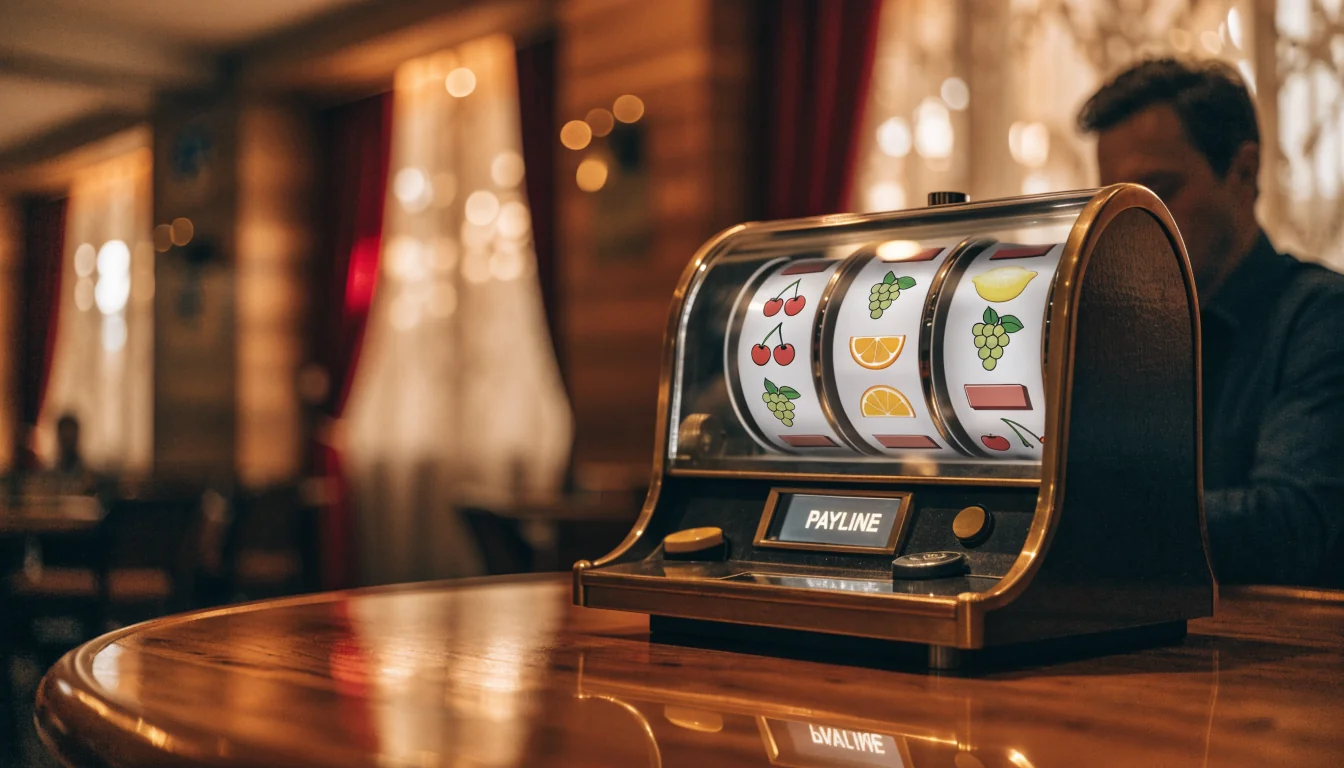
Paylines add a second lever. A machine with a single payline concentrates every outcome into one line of symbols — you either hit it or you don’t, and the volatility of the pay table alone decides how often that happens. Add more paylines, and you multiply the number of chances per spin for a partial win to land somewhere on the grid, which pushes the overall experience further toward "frequent small returns" even before you look at the pay table itself.
This is where betting strategy actually intersects with mechanics, rather than just intuition. Placing smaller bets across machines with multiple paylines is a reasonable way to spread exposure and lean into what a low-volatility design is already trying to do — trade size for frequency. Betting big on a single, wide payline undermines the point of choosing a low-volatility machine in the first place; it reintroduces the kind of swing the format is meant to avoid.
Reading volatility without being told
A few structural signals, read together, tell you more than a game’s description ever will:
- Distance between prize tiers — small gaps across the pay table point to low volatility; a table where most tiers are clustered near the minimum, with one enormous outlier, points to high.
- Number of active paylines — more paylines generally support more frequent partial hits, reinforcing a low-volatility feel.
- Bonus feature design — features that trigger often and pay modestly fit the low-volatility pattern; features that are rare but transform the game when they land usually belong to higher-volatility titles.
- Base game vs. feature reliance — a machine that returns most of its value through the base game, without depending on a rare bonus round, tends to sit lower on the volatility scale.
None of these signals is definitive alone. Together, they’re a reasonably reliable read on how a machine is going to behave over a session — which matters more than any single spin.
The trade-off, stated plainly
Low-volatility mechanics come with a cost, and it’s worth naming rather than glossing over: smaller jackpots, smaller peak payouts, and a ceiling that simply isn’t as high as what a high-volatility machine can produce on a good run. The mechanics that make a session smoother are the same mechanics that cap how far a single spin can carry a player. That’s not a flaw to be talked around — it’s the design working as intended. Anyone choosing between formats is really choosing between session length and ceiling, and the pay table is where that choice gets made before a bet is even placed.
Where this sits legally
None of this changes the legal picture that frames online play for Australians. Online casino-style games — slots included — are prohibited under the Interactive Gambling Act 2001, the Commonwealth law introduced to protect the public with a focus on harm minimisation. There’s a wrinkle worth naming rather than smoothing over: some sources point instead to the Interactive Gambling Act 1997 as the instrument prohibiting the provision of online casino games to Australian residents. The two dates turn up in different places, and it’s not this section’s job to pick a winner between them — only to flag that the discrepancy exists rather than quietly present one version as settled fact.
Legislative Discrepancy
Sources cite both the Interactive Gambling Act 1997 and 2001; the exact year is disputed, but the prohibition on online casino games remains consistent.
What both versions agree on is the target: the law is aimed at operators, not at individual players. It is not illegal for an Australian to play at an offshore-licensed online casino. Understanding pay tables and paylines is a mechanical exercise, useful anywhere these games turn up — but it doesn’t sit inside a domestic licensing framework, because no such framework issuing real-money online casino licences exists in Australia. The mechanics are universal. The legal ground they’re played on is not.
Pragmatic Play’s Low‑Volatility Slots
Pragmatic Play built its catalogue on volume, not depth per title. Spend time with their portfolio and a pattern shows up fast: a lot of low-volatility slot machine entries sitting alongside the flashier, high-variance releases the studio is better known for marketing. That split isn’t accidental — it’s a shelf-stocking strategy. Different players want different rides, and Pragmatic Play makes sure both crowds find something.

What separates their low-volatility titles from the rest of the catalogue is pacing. The reels give back often, in smaller amounts, and the bonus features tend to be built around frequency rather than a single explosive moment. Free spin rounds trigger more readily. Multipliers, where present, climb in modest steps instead of sitting dormant for hundreds of spins waiting to detonate. It’s a design philosophy that rewards patience with steadiness rather than drama.
The gameplay feel matters too. Sessions on these titles run longer for the same stake, simply because the bankroll erodes slower between hits. That’s the whole appeal of "low volatility" as a marketing term — behind it sits a real mechanical choice about how often the pay table pays, not a promise of better long-run value.
Worth noting: none of this touches on where or how these games are legally offered. Online casino slots, Pragmatic Play’s included, remain prohibited under federal law here — the Interactive Gambling Act 2001 doesn’t distinguish between low and high volatility, only between casino games and the sports betting products that state and territory licences do permit. The provider’s slot design is one conversation. Legal access is a separate one entirely, covered elsewhere.
Low‑Volatility Pokies: What Australian Players Need to Know
"Pokies" is the word Australians use, and it carries its own weight — the term shows up in state gaming rooms and pubs, on machines that sit under a state licence and answer to a state regulator. Online, the word gets borrowed, but the machine behind it doesn’t belong to the same system.
There are no domestically licensed real-money online casino operators available to Australian players. That’s not a gap waiting to be filled — it’s the law as it stands. Offering online casino gambling to Australians is illegal, and there’s no application form, no path, no local licence to obtain even for an operator who wanted one. So when a site markets "low-volatility pokies" online, it’s using a word borrowed from the land-based world to describe something the land-based regulator has no part in.
What that means in practice: the low-volatility label works the same way it does anywhere else — smaller, more frequent wins, a pay table built for longer sessions rather than big swings. The mechanics don’t change because the word is Australian. What changes is who’s standing behind the machine. A club pokie answers to a state gaming authority. An online slot marketed with the same name answers to whatever licence the operator holds elsewhere, if any — and that’s a different accountability chain entirely.

Provider portfolios add another layer. A studio’s low-volatility range online is built for its licensed markets generally, not tailored to Australian pokie conventions. The "AU" in a slot’s name is a marketing choice, not a regulatory one. Worth knowing before treating a familiar word as a familiar guarantee.
Highest RTP Low‑Volatility Slots Available in 2026
RTP gets thrown around a lot in pokies marketing, usually stripped of context. It’s a theoretical return figure calculated over millions of spins — not a promise about your session tonight. Still, when comparing low-volatility titles, RTP is one of the few numbers worth checking, because it tells you what the math is built around, even if the exact figure often varies by operator and jurisdiction.
Here’s the catch: no Australian regulator publishes a verified RTP register for offshore-licensed slots, so any figure quoted online should be treated as informational, not guaranteed. There’s no domestic body auditing these numbers for the Australian market specifically.
What’s worth knowing instead:
- Starburst — low-volatility, frequent small wins
- Gemix — low-volatility, cluster-pay mechanics
- Wild Wild Chest — low-volatility, steady payout rhythm
Check the pay table on each title directly. That’s the only figure that’s actually yours to verify.
Top Low‑Volatility Slot Games to Try
If you’re after low volatility slots, the casino behind the games matters just as much as the titles themselves — licensing, deposit terms and payout speed all shape how smoothly your session runs. Here’s a quick rundown of operators worth knowing before you dive in.
License: Curacao Gaming Authority (Jumpman Gaming Ltd) · Bonus: up to A$6,600 + up to 250 free spins across 4 deposits Licensed under the Curacao Gaming Authority via Jumpman Gaming Ltd, this operator stands out for a generous welcome package spread across four deposits, including a solid batch of free spins.
Bonus: 100% up to A$750 + 200 free spins, 35x wagering · Payout speed: crypto 30-120 minutes, fiat 24-72 hours · Min. deposit: A$30 Offers a substantial welcome bonus paired with free spins, and its crypto payouts are notably quick, landing within a couple of hours, while fiat withdrawals take a bit longer. A modest minimum deposit keeps entry accessible.
License: Curacao OGL/2024/1335/0780 · Bonus: up to A$1,000 + 150 free spins, wager-free · Min. deposit: EUR 20 Operating under a current Curacao license, this casino’s wager-free bonus structure is a notable perk, letting new players keep more of their winnings from free spins and matched funds.
License: Curacao · Bonus: 100% up to A$500 + 200 free spins, 10x wagering · Payout speed: crypto 30-60 minutes, fiat 1-5 days · Min. deposit: A$10 Curacao-licensed with a low wagering requirement on its welcome bonus, plus fast crypto payouts and a low minimum deposit, making it approachable for newer or budget-conscious players.
License: Curacao – Antillephone N.V. (Versus Odds B.V.) · Bonus: up to EUR 2,000 across 5 deposits + 200 free spins · Min. deposit: EUR 20 Licensed through Antillephone N.V., this operator backs a large multi-deposit welcome bonus with a healthy allotment of free spins, aimed at players looking for extended value early on.
License: Curacao eGaming OGL/2024/923/0383 (Antillephone N.V.) · Bonus: up to A$2,000 + 100 free spins across 2 deposits · Min. deposit: A$30 Holding a Curacao eGaming license via Antillephone N.V., it offers a two-deposit welcome bonus with free spins included, with a moderate minimum deposit requirement.
License: Curacao Gaming Control Board OGL/2023/176/0095 (Hollycorn N.V.) · Bonus: up to A$5,000 + 300 free spins across 4 deposits Licensed by the Curacao Gaming Control Board through Hollycorn N.V., this casino spreads a large bonus across four deposits alongside a generous free spins allowance.
License: Curacao Gaming Control Board (TechSolutions Group N.V.) · Bonus: 100% up to A$250 + 100 free spins (1st deposit) Regulated by the Curacao Gaming Control Board via TechSolutions Group N.V., it keeps things simple with a straightforward first-deposit bonus paired with free spins.
License: Curacao Gaming Control Board OGL/2023/176/0095 (Hollycorn N.V.) · Bonus: up to A$11,000 + 300 free spins (code NEO100) Licensed by the Curacao Gaming Control Board under Hollycorn N.V., this operator offers one of the larger bonus amounts on this list along with free spins unlocked via a bonus code.
Bonus: up to A$750 + 50 jackpot spins, 35x wagering · Payout speed: crypto ~90 minutes, fiat 1-5 days · Min. deposit: A$30 Provides a welcome bonus that includes jackpot spins rather than standard free spins, with quick crypto payouts and a moderate minimum deposit for those funding accounts digitally.
Beyond the RTP leaders, a handful of titles have stayed on rotation for years, and there’s a reason for that. They don’t chase novelty — they just keep paying small and often.
- Starburst — NetEnt’s classic, low-volatility, built around re-spins rather than big swings.
- Dead or Alive — often filed under low-volatility despite the outlaw theme; steady returns, no drama.
- Gemix — a match-style grid slot with frequent small hits.
- Gonzo’s Quest — avalanche mechanic keeps the reels moving without demanding big bets.
- Thunderstruck II — Microgaming’s long-runner, multiple bonus wheels, gentle curve.
- Wild Wild Chest — steady pace, no long dry stretches between wins.
None of these need a licensed local casino to exist — because there isn’t one. They circulate through offshore-licensed sites, which is a separate conversation from whether the game itself suits a cautious bankroll. That part’s simple: pick low-volatility, bet small, spread it out.
Published by the Casino Features Guide team.