
Casino VIP Programs in Australia: How They Work

- Online Casino Legality and Regulation in Australia
- VIP Benefits and Bonus Structures for Australian Slot Players
- Accessible Online Casino Platforms for Australian Gamblers
- VIP Deposit Bonuses and Cryptocurrency Options: What’s Permitted
- Loyalty Programs and Slot‑Based Rewards for VIP Members
- Reward Structures in Australian VIP Casinos
- Typical Structure of Australian VIP Casino Programs
- VIP Rooms and Crypto Gaming: Availability and Restrictions
- Current Landscape of VIP Casino Programs in Australia (2026)
- VIP Club Membership Requirements and Access Rules
Online Casino Legality and Regulation in Australia
Before any talk of VIP tiers or loyalty perks makes sense, the legal ground underneath needs to be clear. And that ground is messier than most operators let on.
The core law is the Interactive Gambling Act 2001. It criminalises the supply of online casino games — slots, roulette, blackjack, poker — to anyone physically located in Australia, regardless of where the operator is based. Doesn’t matter if the company sits in Malta, Curaçao, or nowhere in particular. If the player is in Australia, offering them a casino game online is an offence under the Act.
Here’s the part that trips people up: the law targets the supplier, not the player. It is not illegal for someone in Australia to open an account and gamble at an online casino. The Act was built to go after operators, not to punish the people clicking "spin." So a player logging in isn’t breaking anything. The company on the other end of that connection is the one operating outside the law — from Australia’s point of view, anyway. Whether their home jurisdiction agrees is a separate question entirely.

That asymmetry is the whole reason offshore casinos can market to Australians at all. No domestic operator can legally run a real-money online casino — there’s no licence to apply for, no regulator that issues one, because the activity itself is prohibited at the point of supply. I’ve seen the confusion this causes firsthand: players assume that if a site is running, someone must have approved it. Nobody has. It’s running because enforcement against a foreign-registered company is hard, not because it’s sanctioned.
Why there’s no single regulator to point to
Australia doesn’t have one gambling authority the way some markets do. Regulation is split between federal and state/territory levels, and each layer covers different ground.
- Federal level — the Australian Communications and Media Authority (ACMA) enforces the Interactive Gambling Act 2001. Its tools are limited to what the Act allows: investigating prohibited services and ordering blocks. It doesn’t licence casinos, because there’s nothing to licence.
- State and territory level — each jurisdiction runs its own gambling regulator, and their remits mostly cover licensed land-based venues, lotteries, and state-based wagering, not offshore online casinos.
- The Northern Territory Racing Commission (NTRC) occupies an odd position: it’s become the de-facto regulator for online gambling generally, simply because it licenses most of the national online bookmakers, drawn there partly by lower tax rates. That’s a betting-industry role, though — not a casino-licensing one.
- The Victorian Gambling and Casino Control Commission (VGCCC) monitors wagering service providers for compliance with the National Consumer Protection Framework, including operators based in other states. Again, this is about licensed wagering, not offshore casino platforms.
None of these bodies issues a casino licence that covers online slots or table games for the Australian market. There’s no register to check, because there’s no register. When a website claims to be "fully licensed for Australian players" in a way that implies local approval for casino games, that claim doesn’t map onto anything real. The licence, if there is one, was issued somewhere else, under someone else’s rules.
What’s actually prohibited, and what isn’t
It helps to separate the categories, because the law doesn’t treat all online gambling the same way.
| Activity | Legal status in Australia |
|---|---|
| Online casino games (slots, roulette, blackjack, poker) | Prohibited under the Interactive Gambling Act 2001 |
| In-play online sports betting | Prohibited federally |
| Fixed-odds online sports betting (pre-match) | Legal, under state/territory licences |
| Player accessing an offshore casino site | Not illegal for the individual |
| Operator supplying casino games to Australian residents | Illegal, regardless of where the operator is based |
The pattern is consistent: supply-side restrictions, demand-side tolerance. That’s a deliberate choice, not an oversight. Chasing individual players would be near-impossible and politically unpopular. Going after operators — or at least trying to, through site-blocking — is the more workable lever, even if it’s a blunt one.
What this means for the VIP conversation ahead
I’ll say this plainly because it matters for everything that follows: nothing in this legal framework has anything to do with VIP tiers, bonus structures, or loyalty points. Those are commercial features an operator builds on top of its own product. The Interactive Gambling Act doesn’t regulate loyalty schemes; it regulates whether the underlying casino game can be supplied to someone in Australia at all.
That distinction gets blurred constantly in marketing copy, usually on purpose. A site might lean hard on words like "licensed" or "regulated" right next to a VIP program pitch, letting the reader’s eye connect the two ideas — as if regulatory approval and reward-tier generosity come from the same place. They don’t. One is a legal status (or the absence of one); the other is a business decision about how to keep depositing customers depositing. Keep them separate in your head, because the operators counting on you not to are the same ones running the loyalty programs discussed later in this piece.
There is no domestic licensing regime for online casino VIP programmes, meaning Australian regulators do not oversee the terms or enforcement of those perks.
The absence of a domestic licensing regime also means there’s no consumer-protection floor set by an Australian regulator for how a VIP program has to behave — no local body reviewing wagering requirements, no local ombudsman for casino-specific disputes tied to a state gambling authority. Whatever protections exist come from wherever the operator happens to be licensed, if anywhere, and enforcement of those protections happens under that jurisdiction’s rules, not Australia’s.
None of this makes playing at an offshore casino illegal for an Australian resident, and it’s worth repeating that clearly since the law is often misread the other way around. It does mean the usual instinct — "check if they’re licensed" — doesn’t function the way it does in markets with an actual local registry. There’s nothing here to check against. That gap is exactly where VIP program terms, bonus conditions, and reward structures need to be read on their own merits, not on the assumption that a licence badge in the footer means an Australian authority signed off on any of it.
VIP Benefits and Bonus Structures for Australian Slot Players
Ask any operator what "VIP" means and you get the same brochure language: exclusive perks, personal account managers, faster withdrawals. What you don’t get is a number. Not because they’re hiding one — there isn’t one to hide. No regulator publishes standard terms for these programs, because no regulator licenses these programs in the first place.
All VIP schemes discussed are operated under offshore licences that Australian law does not recognise or regulate.
That gap matters more here than on most markets. The Interactive Gambling Act criminalises the supply of online casino games to people in Australia — some sources date this to the 1997 version of the law, others to the 2001 amendment, and the two get cited interchangeably even in official material. Either way, the operators running VIP schemes for Australian slot players are doing so from outside the country, under licences that Australian law doesn’t recognise and Australian regulators don’t inspect. A "VIP manager" answering emails at 2am isn’t proof of a regulated benefit tier. It’s a customer service position at a company that isn’t accountable to anyone here.
What a VIP structure typically bundles together
Every VIP scheme I’ve seen, regardless of the operator’s home jurisdiction, groups its perks into a handful of recurring categories:
- Faster or larger withdrawals — a tier-based promise, not a guaranteed limit, since no consistent figures exist across operators.
- A dedicated contact person — usually framed as personal service, though the actual authority this person has over your account varies by operator and is rarely disclosed.
- Invitations to events or exclusive game rooms — cosmetic more than financial, but heavily marketed.
- Bonus offers layered on top of standard promotions — extra spins, matched deposits, or cashback specific to slots.
- Slot-specific rewards — points or multipliers tied to wagering on slot titles rather than table games.
Notice what’s missing from that list: exact wagering requirements, caps, or timeframes. Operators are supposed to display wagering requirements clearly before offering a bonus — that’s a baseline expectation, not a VIP-tier extra — but how a given slot-focused VIP bonus applies that requirement, and whether the terms differ from the operator’s standard promotions, isn’t something I can verify against any public source. Anyone telling you "VIP wagering is typically lower" is guessing on your behalf.
The "exclusive" bonus, examined
Slot players get pitched a specific flavour of VIP bonus: free spins packages, deposit matches gated behind a loyalty tier, or "personal" offers that arrive by email rather than sitting on the promotions page. The appeal is obvious — it feels earned rather than advertised. The mechanics behind it are the same as any other bonus: a credit, a playthrough condition, and a list of eligible games that count toward clearing it. Terms and conditions should spell out exactly which slot titles qualify and how much of each wager counts. If that list isn’t there, or is buried three clicks deep, the "personal" offer is functioning identically to a mass promotion with better copywriting.
Where this sits against the regulatory backdrop
None of this VIP infrastructure exists because Australian law permits it. It exists because the law targets the operator, not the player — accessing and playing at an offshore casino isn’t a criminal act for someone in Australia, even though offering that casino to them is. ACMA’s enforcement has pushed a measurable number of services out of the market since it started ordering ISP-level blocks in 2019; more than a hundred exited by one account, closer to two hundred and twenty by a more recent one — the figures come from different points in an ongoing process, not a settled tally. What that enforcement doesn’t touch is the content of any individual VIP program. ACMA can get a site blocked. It has no mechanism to audit whether a "VIP support line" actually resolves disputes, or whether a tier’s promised perks match what a player receives.
That’s the honest state of things: the perks are real in the sense that operators do offer them, and unregulated in the sense that nobody outside the operator verifies the claims attached to them. A South Australian Place Of Consumption Tax, introduced in 2016, taxes wagering revenue at the state level — it has nothing to do with what a VIP tier includes, but it’s a reminder that Australian tax authorities have found ways to reach into this market even where licensing hasn’t.
If a VIP offer looks generous, the generosity itself isn’t the question worth asking. The question is who wrote the terms, where they’re enforceable, and what happens when a dispute lands on a desk nobody in Australia has jurisdiction over.
Accessible Online Casino Platforms for Australian Gamblers
The confusion I ran into most often, on both sides of the industry, is people conflating "illegal to offer" with "illegal to use." They’re not the same thing, and the gap between them is exactly why offshore casinos keep operating and Australian players keep signing up.

No operator can hold an Australian licence for online casino games. That’s settled. But the law was written to target the business, not the customer — so a player logging into an offshore-licensed site isn’t committing an offence. It’s a lopsided arrangement: the house carries all the legal exposure, the player carries none. I’ve seen operators structure entire compliance strategies around that asymmetry, because it means demand never really goes away, it just gets pushed offshore.
This is also where the platform question splits into three separate things that get lumped together in casual conversation:
Online casino games — slots, roulette, live dealer tables — sit outside the Australian licensing system entirely. Anything a player accesses is licensed somewhere else: Malta, the UK, Curaçao, wherever the operator chose to set up. There’s no local equivalent to point to.
Online sports betting works on the opposite model. It’s licensed at the state and territory level, which means an Australian-facing sportsbook can be a fully legitimate, locally regulated business — a genuinely different category from casino products, even when the same corporate group runs both under one login.
Land-based casinos are a third system again, regulated by state governments and their own enforcement bodies, with no connection to the federal framework that governs anything happening online. Walking into a physical casino floor and playing on an offshore site from your phone are governed by two regulators that don’t talk to each other.

Who actually polices any of this
The Australian Communications and Media Authority enforces the Interactive Gambling Act at the federal level — that’s the body with authority over what happens online. State regulators like the Victorian Gambling and Casino Control Commission or Liquor & Gaming NSW exist, and they do serious work on consumer protection domestically, but their reach stops at the border in any practical sense. An offshore operator licensed in another jurisdiction isn’t answering to a Melbourne or Sydney regulator, and both agencies know it. I’ve sat in rooms where this exact limitation was discussed as a known, permanent feature of the landscape — not a gap anyone expects to close soon.
That’s the honest shape of "accessible": accessible doesn’t mean endorsed, supervised, or backed by an Australian licence. It means nobody is stopping the player from connecting, and nobody local is standing behind the operator either.
One category that looks legal but isn’t
Live, in-play betting placed online is prohibited — this applies to sports betting too, not just casino products. The same wager placed by phone is legal. It’s a strange line, but it’s the actual line, and it’s worth knowing because it’s the one rule in this space that trips people up who assume "online" and "on the phone" are interchangeable.
What this means in practice
There’s no register of approved platforms to check against, because no domestic register exists for this category. State bodies won’t vouch for an offshore site, and ACMA’s job is enforcement against operators, not curation of a safe list for players. Anyone telling you to "pick a licensed platform" as if that licence were local is skipping the part where that licence was never going to be Australian in the first place — it’s foreign, and it’s the only kind on offer.
The practical distinction that actually matters isn’t "legal versus illegal platform." It’s land-based versus online, and within online, casino games versus sports betting versus the narrow in-play exception — three different regulatory realities wearing the same "gambling" label.

VIP Deposit Bonuses and Cryptocurrency Options: What’s Permitted
A "VIP deposit bonus" is marketing language before it’s anything else. It describes a bigger match on a deposit, sometimes a welcome offer dressed up with a VIP label to make a new player feel singled out. Nothing about it is regulated, licensed, or guaranteed by anyone in Australia — because the operator offering it isn’t licensed here to begin with. No domestic authority reviews these terms, approves the wording, or checks that "VIP welcome bonus" means what it says.
That matters more with crypto than with anything else on the page.
Bitcoin and similar payment options show up in offshore casino marketing as if they were just another deposit method, no different from a bank transfer. They’re not treated the same way under the local framework. The restrictions here target the supply of the casino games themselves — the Interactive Gambling Act doesn’t carve out a separate rulebook for how a deposit reaches the operator’s system, whether that’s a card, an e-wallet, or a wallet address. The game is the problem, not the payment rail.

What the regulator can actually do about it
The Australian Communications and Media Authority can request that internet providers block a website offering games not permitted under Australian law — that covers online casinos and online slots directly, bonus or no bonus. As of a 2024 publication, ACMA had blocked access to 975 illegal gambling and affiliate sites since November 2019. A later figure puts the count at 1,296 blocked sites and affiliates by August 2025, with over 220 services said to have exited the market voluntarily. Both numbers come from the same enforcement program; they just measure it at different points, and neither source reconciles the gap.
What ACMA can’t do is chase the money once it’s moved. If a deposit bonus turns sour — wagering terms that don’t match what was advertised, a withdrawal that never clears — the regulator can investigate the platform and push for a block. It cannot recover funds or settle a dispute between a player and an offshore operator. That’s a private argument with a company sitting outside Australian jurisdiction, and it stays that way regardless of whether the deposit was made in dollars or Bitcoin.
Legal risk
If a VIP bonus or reward is not honoured, Australian players have no local authority to enforce repayment or resolve the dispute.
Advertising rules don’t reach every corner of this either. ACMA has no power to force platforms like Facebook to pull gambling ads aimed at Australians, because the law only prohibits advertising "in Australia" — a wording gap that lets offshore operators keep VIP bonus promotions circulating on social media largely unchecked.
None of this is loyalty. A deposit bonus is a one-time hook tied to money going in. A loyalty scheme is something else — built around ongoing play, not a single transaction — and the two get blurred in marketing copy on purpose.
What the bonus terms themselves actually require — wagering conditions, eligible games, caps — isn’t something regulators publish or verify, because there’s no domestic body reviewing offshore contracts at all.
Loyalty Programs and Slot‑Based Rewards for VIP Members
Slot loyalty schemes work on a simple premise: play more of a specific game type, get tracked more closely, get offered more. The mechanism sounds neutral. It isn’t. A points system built around slot volume rewards volume, not skill or luck — which means the "loyalty" being measured is really just spend, dressed up in gamified language.
What I can say with confidence is what I can’t say. There’s no published, verifiable breakdown of how any offshore operator’s slot loyalty tier actually calculates points, converts them, or caps them for Australian players. No regulator here publishes that data, because no regulator here licenses these platforms in the first place. Anything more specific than "play tracked, tier assigned" is the operator’s own marketing copy, not a fact I’d stake anything on.
Why slots specifically
Slots get their own loyalty track in most VIP structures because they’re the easiest bet type to measure. Every spin has a fixed cost and a fixed outcome window — no skill variance to account for, unlike blackjack or poker. That makes slot play the cleanest data for an operator to build a rewards ladder on. It’s not that slot players are more "valued." It’s that they’re more measurable.

The regulatory backdrop
Nothing here changes what’s already true about the platforms offering these programs: they operate offshore, outside Australian licensing, and no operator has actually been charged under the Interactive Gambling Act for running one. That’s not an endorsement of safety — it’s just the enforcement record as it stands. Separately, one industry source (theiaga.org) has reported that over 100 illegal gambling services exited the Australian market after ACMA stepped up enforcement from 2017 onward, and another source (boomaff.com) put the figure at over 220. Different counts, same direction: operators leave when blocking orders make the market not worth serving, not because a court found them guilty of anything.
What a loyalty scheme is not
It’s not a bonus. Bonuses are one-off or conditional offers tied to a deposit or a promotion. A loyalty scheme is ongoing — it tracks behaviour over time and adjusts what’s offered based on it. Confusing the two is how players end up expecting bonus-style terms (clear wagering figures, fixed expiry) from a system that was never built to disclose those in the same way.
I’d rather tell you that plainly than repeat a number I can’t back up.
Reward Structures in Australian VIP Casinos
Points and cash-back get talked about like they’re a fixed currency — a certain number of points always equals a certain payout. In practice, the allocation sits entirely inside whatever engine the operator built, and nobody outside that company can audit how it runs.
That’s worth sitting with for a second. In a licensed market, a regulator would have visibility into how rewards are calculated and could demand records if a player disputed a payout. Here, that layer doesn’t exist for the operators Australians actually use.
The regulators that do exist in this country aren’t positioned to help. The VGCCC monitors wagering service providers — including ones based outside Victoria — against the National Consumer Protection Framework. Liquor & Gaming NSW runs a similar remit in its state. Both bodies oversee land-based venues and licensed wagering operators as part of a state-based system built around physical premises and locally licensed betting products.
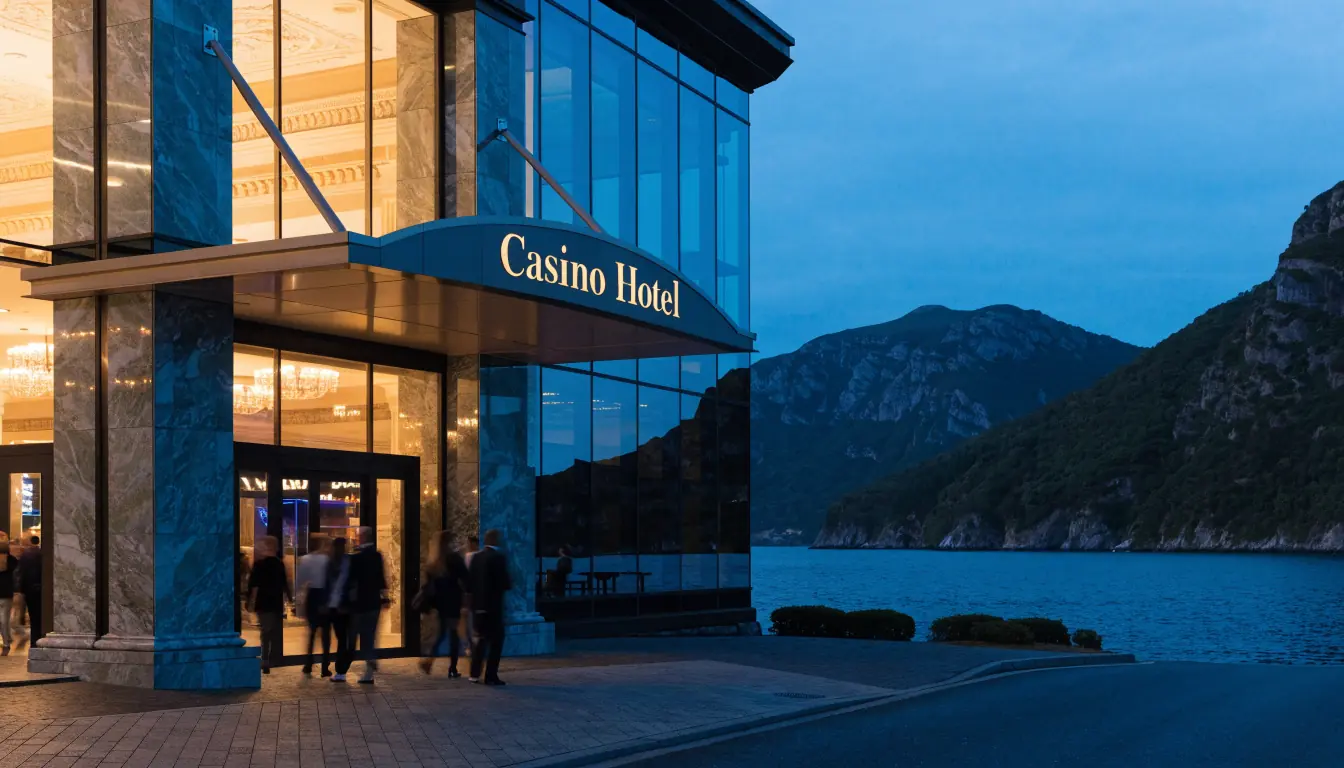
Offshore online casinos sit outside that system entirely. They’re not licensed in any Australian state, so there’s nothing for VGCCC or Liquor & Gaming NSW to actually monitor. Both regulators have acknowledged their reach over offshore platforms is limited — which is a polite way of saying: if the reward calculation looks wrong, there’s no state body you can call.
What that means for how rewards actually get allocated
Cash-back percentages, point values, comp conversion rates — all of it is configured by the operator, for the operator’s benefit, with no external party checking the math. That doesn’t mean every operator is running a rigged system. It means the honesty of the system rests entirely on the operator, because the usual backstop — a regulator with actual jurisdiction — isn’t in the chain.
"Exclusive rewards tailored to you" is the phrase that shows up in marketing copy. What it actually means: a set of rules only the operator can see, applied by software only the operator controls, with no regulator positioned to check the output.
Not illegal to receive them. Just unverifiable by anyone but the house.

Typical Structure of Australian VIP Casino Programs
Every VIP program I’ve looked at, regardless of operator, follows roughly the same skeleton. There’s an entry tier that rewards volume of play rather than skill, a middle tier that starts attaching a personal account contact, and a top tier that gets described in marketing copy as "invitation-only" — which usually just means someone in a spreadsheet flagged your deposit history.
The criteria for moving between tiers are almost never published in full. What operators do disclose is that tiers exist and that they’re based on activity: how often you play, how much you stake, how long you’ve been a customer. What they don’t disclose — and won’t, because it’s not required of them — is the exact formula. That’s a deliberate gap, not an oversight.
The usual shape
- Entry level — automatic on sign-up or after a first deposit, minimal perks, mainly there to make the program look inclusive.
- Mid tiers — faster support responses, occasional personalised offers, sometimes early access to new games.
- Top tier — the one built around the fantasy of a dedicated host, “bespoke” rewards, and a phone number instead of a support ticket queue.
None of this structure is regulated. Australia has no single overarching statute or single overarching gambling authority — oversight is split between state, territory, and federal levels, and none of them writes rules about how a loyalty tier has to be built. The Interactive Gambling Act 2001 (also referenced in older material as the 1997 Act, and the two versions don’t always agree in secondary sources) covers the legality of offering the games themselves. It says nothing about how a VIP ladder inside that offering should look. That silence is exactly why every operator’s tier list reads slightly differently while doing the same thing.
The Act exists to protect the public through harm minimisation, not to standardise marketing structures. So when a program’s tier names sound elaborate — "Sapphire," "Diamond," whatever comes next — that’s branding filling a vacuum, not evidence of a stricter or looser system underneath.
VIP Rooms and Crypto Gaming: Availability and Restrictions
A "VIP room" is a marketing wrapper, not a physical or legal category. Nobody hands out a floor plan showing where the exclusive tables sit. What exists is a separate lobby view or a tagged set of tables inside the same platform that already serves everyone else — same servers, same licence (issued somewhere other than Australia, since no domestic one exists), same rules underneath. The "exclusivity" is an access flag on an account, not a different product.
Crypto gaming sits in a stranger spot. Bitcoin and Ethereum show up in payment menus at plenty of offshore operators, often pitched as the fast, low-friction option that pairs neatly with a VIP tier. What that pitch skips: none of this runs through anything Australia licenses or oversees. There’s no domestic framework that recognises crypto casino play as a regulated activity, because there’s no domestic framework that recognises the casino play itself as legal to offer here in the first place. The coin isn’t the problem or the solution — the underlying service is the same unlicensed offering, just settled in a different currency.

This matters for enforcement, and it’s worth being blunt about the limits on that enforcement too. The Australian Communications and Media Authority can request that access to a site be blocked when it offers games not permitted under Australian law — online casinos, online slots, in-play sports betting included. By its own account, ACMA had blocked 1,296 illegal gambling sites and affiliates since 2019 as of August 2025, with 220 services said to have exited the market voluntarily over that period.
What that authority doesn’t extend to is advertising reach. ACMA has no power to force platforms like Facebook to pull gambling ads aimed at Australian users, because the legislation’s wording only prohibits advertising "in Australia" — a phrase that hasn’t kept pace with how targeting actually works online. So a VIP room built around crypto deposits can be blocked as a website and still reach the same audience through a feed.
None of this tells you what a specific VIP room offers, or which crypto terms attach to it. Operators don’t publish that centrally, and no regulator compiles it either.
Current Landscape of VIP Casino Programs in Australia (2026)
If you’re chasing a rewarding VIP experience in 2026, it’s worth checking how each casino’s licensing, welcome offer, and payout terms actually stack up before you commit.
License: Curacao Gaming Authority (Jumpman Gaming Ltd) · Bonus: up to A$6,600 + up to 250 free spins across 4 deposits Operates under a Curacao Gaming Authority license via Jumpman Gaming Ltd, and backs its welcome package with a sizeable bonus spread across four deposits plus a generous batch of free spins.
Bonus: 100% up to A$750 + 200 free spins, 35x wagering · Payout speed: crypto 30-120 minutes, fiat 24-72 hours · Min. deposit: A$30 Offers a solid deposit match with free spins under a 35x wagering requirement, and stands out for fast crypto payouts alongside a low minimum deposit threshold.
License: Curacao OGL/2024/1335/0780 · Bonus: up to A$1,000 + 150 free spins, wager-free · Min. deposit: EUR 20 Licensed under a specific Curacao OGL registration, this operator’s welcome bonus with free spins is notably wager-free, paired with an accessible minimum deposit.
License: Curacao · Bonus: 100% up to A$500 + 200 free spins, 10x wagering · Payout speed: crypto 30-60 minutes, fiat 1-5 days · Min. deposit: A$10 Curacao-licensed with a welcome offer featuring a low 10x wagering requirement, plus quick crypto withdrawal times and a very low minimum deposit.
License: Curacao – Antillephone N.V. (Versus Odds B.V.) · Bonus: up to EUR 2,000 across 5 deposits + 200 free spins · Min. deposit: EUR 20 Holds a Curacao license through Antillephone N.V., and spreads a substantial welcome bonus with free spins across five deposits, giving players an extended onboarding runway.
License: Curacao eGaming OGL/2024/923/0383 (Antillephone N.V.) · Bonus: up to A$2,000 + 100 free spins across 2 deposits · Min. deposit: A$30 Licensed under a registered Curacao eGaming permit via Antillephone N.V., with a two-deposit welcome bonus that includes free spins and a moderate minimum deposit.
License: Curacao Gaming Control Board OGL/2023/176/0095 (Hollycorn N.V.) · Bonus: up to A$5,000 + 300 free spins across 4 deposits Operates under a Curacao Gaming Control Board license issued to Hollycorn N.V., offering one of the larger welcome packages on this list spread over four deposits with a large free spins allocation.
License: Curacao Gaming Control Board (TechSolutions Group N.V.) · Bonus: 100% up to A$250 + 100 free spins (1st deposit) Licensed by the Curacao Gaming Control Board through TechSolutions Group N.V., with a straightforward first-deposit bonus paired with free spins.
License: Curacao Gaming Control Board OGL/2023/176/0095 (Hollycorn N.V.) · Bonus: up to A$11,000 + 300 free spins (code NEO100) Holds a Curacao Gaming Control Board license via Hollycorn N.V., and offers a notably large welcome bonus with free spins unlocked through a bonus code.
Bonus: up to A$750 + 50 jackpot spins, 35x wagering · Payout speed: crypto ~90 minutes, fiat 1-5 days · Min. deposit: A$30 Provides a welcome bonus including jackpot spins under 35x wagering, with quick crypto payout times and a moderate minimum deposit requirement.
Nothing structural changed heading into 2026. The Interactive Gambling Act 2001 still criminalises the supply of online casino games by any operator, anywhere, to anyone sitting in Australia — that’s the piece people keep expecting to see repealed or "clarified" every year, and it hasn’t happened. VIP programs, whatever shape they take, exist entirely outside that law’s reach, because the law was never written to touch them. It targets suppliers, not the loyalty tiers those suppliers dangle in front of players.
What’s actually moved is enforcement pressure, not the rulebook. The Australian Communications and Media Authority keeps working through its blocklist, and operators keep adjusting how loudly they promote themselves rather than whether they promote a "VIP program" at all. I’ve watched this play out before: a site gets flagged, the domain changes, the loyalty scheme survives intact under a new URL. The program itself is rarely the target — it’s marketing collateral, and collateral is cheap to rebuild.
So the landscape in 2026 looks less like a market with new VIP rules and more like the same unregulated space, patrolled at the edges. No domestic license covers any of this. No Australian regulator inspects a "VIP terms" page before it goes live. That hasn’t changed, and nothing in current enforcement activity suggests it will.
Same gap.

Which means the practical situation for anyone reading about VIP tiers this year is identical to last year’s: whatever an offshore operator calls its top tier, it’s a private arrangement between that operator and the player, sitting entirely outside Australian oversight. The regulatory story hasn’t caught up to the marketing story — and there’s no sign it’s trying to.
VIP Club Membership Requirements and Access Rules
Signing up for a VIP club is, at its core, the same act as opening a regular account — nobody in Australia asks you for a special permit to gamble at higher stakes. Access itself isn’t illegal here. It’s the operator’s side of the arrangement that carries the legal risk, not yours.
That said, "VIP" isn’t a status you apply for on day one. Every club I’ve seen sits behind an existing account, meaning the entry conditions are identical to those for any other player before the tier system even enters the conversation.
What actually gates entry
- Age. Eighteen, verified before deposits are unlocked — no exceptions, no regional variation.
- Identity checks. Documents get requested, and the timing tends to shift once a player starts moving larger sums, which is exactly when VIP status becomes relevant.
- A funded, active account. VIP status is layered on top of ordinary play. There’s no separate “club” door to walk through.
- A licence — somewhere else. The operator’s licence sits with whatever authority granted it abroad, not with anything issued locally. There’s no Australian body handing out approvals for this kind of membership.
What you won’t find, anywhere legitimate, is a public register to check any of this against. No local authority maintains one. So "membership requirements" here really means the operator’s own paperwork, not a set of national rules you can look up.
One local detail worth knowing, even though it touches operators rather than players directly: South Australia introduced a 15% tax on gambling consumed by its residents back in 2016. It doesn’t change who can join a club. It’s a reminder that the money behind these programs is taxed somewhere, even when the platform itself sits offshore.
"Exclusive" access. Ordinary onboarding underneath.